
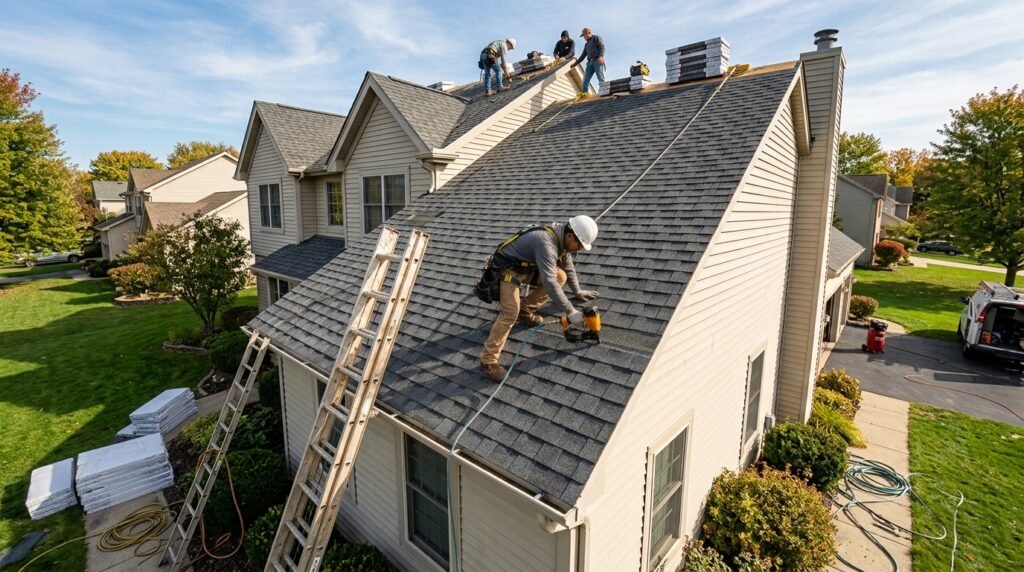
Getting quotes for a new roof can feel like sticker shock — until you understand what actually drives the price. Roof replacement isn’t a one-size-fits-all expense, and the number on your contractor’s estimate depends on far more than square footage.
So, how much does a new roof cost in 2026? For a typical 2,000-square-foot home, most homeowners pay somewhere between $8,000 and $30,000, with many landing closer to $14,000 to $20,000 for a standard architectural asphalt shingle roof. Premium materials like metal, slate, or tile can push that number considerably higher. Let’s break down exactly what you’ll pay — and why.
Average New Roof Cost in 2026: Quick Answer
Across national data sources, the picture is fairly consistent: a full roof replacement on an average American home runs between $8,000 and $30,000, with the sweet spot for a standard asphalt shingle job sitting around $14,000 for a mid-size, 2,000-square-foot house. On a per-square-foot basis, installed roofing typically costs roughly $3.50 to $12.00, though luxury materials can climb well beyond that.
Keep in mind these are installed prices — meaning tear-off, materials, labor, and cleanup are all baked in. A bare material estimate without labor will always look cheaper, but it’s not the number that matters when you’re budgeting.
New Roof Cost by Roof Size
Bigger roofs cost more overall, but the price per square foot often drops slightly as size increases, since fixed costs like permits, dumpster rental, and setup get spread across more material.
| Roof Size | Low Estimate | Average | High Estimate |
|---|---|---|---|
| 1,000 sq ft | $4,000 | $7,500 | $11,000 |
| 1,500 sq ft | $8,000 | $11,500 | $16,500 |
| 2,000 sq ft | $10,000 | $14,500 | $22,000 |
| 2,500 sq ft | $12,000 | $17,500 | $27,500 |
| 3,000 sq ft | $14,000 | $20,000 | $33,000 |
Note that “roof size” isn’t the same as your home’s living space — roof surface area is usually 1.3 to 1.5 times your floor plan once you account for pitch and overhangs.
New Roof Cost by Material
Material choice is the single biggest lever you control when it comes to your final bill.
Asphalt Shingles (3-Tab and Architectural)
The most common roofing material in the U.S. by a wide margin. Basic 3-tab shingles run about $4.00 to $5.00 per square foot, totaling $8,000 to $12,000 for an average roof. Step up to architectural (dimensional) shingles — thicker, longer-lasting, and better-looking — and you’re looking at $5.00 to $7.00 per square foot, or roughly $15,000 to $30,000 installed. Expect a 20 to 30 year lifespan.
Metal Roofing
Metal has surged in popularity for its durability and energy efficiency. Standing seam steel and aluminum panels typically cost $18,000 to $45,000 for a full replacement, but they can last 30 to 50 years and reflect heat, which can meaningfully cut summer cooling bills.
Slate, Clay, and Concrete Tile
These are the luxury end of the spectrum, priced anywhere from $10 to $30 per square foot. The payoff is longevity — quality slate can last 125 to 200 years, essentially a lifetime roof, though the structural weight often requires reinforced framing, adding to cost.
Wood Shingles and Shakes
A natural, rustic option priced around $6 to $15 per square foot, lasting roughly 30 to 50 years. Some municipalities restrict wood roofing in high fire-risk zones, so check local codes first.
Synthetic and Composite Shingles
Designed to mimic slate or wood at a lower cost and weight, synthetic shingles run $5 to $12 per square foot with a 25 to 50 year lifespan — a solid middle ground for homeowners who want the look of premium materials without the premium price tag.
What Affects the Cost of a New Roof?
Roof Size and Pitch
Larger, steeper roofs need more material and more time. Steep-slope roofs also require extra safety equipment and slower, more careful installation, which increases labor charges.
Roof Complexity
Dormers, skylights, chimneys, valleys, and multiple roof planes all add labor hours. A simple rectangular roof is far cheaper to install than one with lots of angles and penetrations.
Tear-Off and Disposal
Removing your old roof — especially if there are multiple existing layers — adds to the bill. Dumpster rental, disposal fees, and the extra labor for tear-off can add several hundred to a few thousand dollars.
Labor Costs
Labor typically makes up more than half of your total roofing bill. Roofing crews generally charge $40 to $90 per hour per worker, and rates vary significantly by region and season — spring and fall (peak roofing season) tend to be pricier than winter.
Location
Labor rates, permit fees, and even material costs vary by state and city. Coastal and high-cost-of-living metro areas typically run 15–30% higher than the national average.
Permits and Inspections
Most municipalities require a permit for a full roof replacement, and some require follow-up inspections. Budget $150 to $500 depending on your local building department.
Labor vs. Materials: Where Does the Money Go?
Roughly 60% of your roof replacement budget goes toward labor, while materials account for the remaining 40%. That’s an important detail if you’re comparing quotes — a bid that looks unusually cheap may be cutting corners on labor time, crew size, or underlayment quality rather than just using less expensive shingles.
Signs You Need a New Roof
Not sure if repair or full replacement makes more sense? Watch for these warning signs:
- Shingles that are curling, cracking, or missing granules
- Daylight visible through the roof boards in your attic
- Water stains or active leaks on interior ceilings
- A roof that’s 20+ years old (for asphalt) with no recent major work
- Sagging rooflines or soft spots underfoot
If your roof is showing two or more of these signs, it’s worth getting a professional inspection before winter storms or summer heat make the damage worse.
How to Save Money on a New Roof
- Get at least 3 quotes. Prices for the same job can vary by thousands of dollars between contractors.
- Time it right. Off-season (late fall/winter in most regions) often brings lower labor rates.
- Choose mid-tier materials. Architectural shingles offer a strong balance of cost, looks, and lifespan.
- Ask about insurance coverage. Storm or hail damage may be partially covered — check your homeowner’s policy before paying out of pocket.
- Bundle work. If you’re also replacing gutters or adding attic ventilation, doing it alongside the roof can reduce total labor costs.
DIY vs. Hiring a Professional Roofer
While it’s technically possible to install a simple shed or garage roof yourself, a full home roof replacement is not a beginner DIY project. Between the steep learning curve, fall risk, and the way a poor installation can void material warranties or cause leaks down the line, most homeowners are better off hiring a licensed, insured roofing contractor — even though it costs more upfront.
Roof Financing Options in 2026
If $14,000+ isn’t sitting in your savings account, you’re not alone. Common financing routes include:
- Home equity loans or HELOCs — often the lowest interest rate option
- Contractor financing plans — many roofing companies partner with lenders for 0% introductory offers
- Personal loans — faster approval, but typically higher interest
- Government or utility rebate programs — some regions offer incentives for energy-efficient roofing materials like reflective metal or cool roofs
How to Get Accurate Roof Replacement Quotes
When comparing estimates, make sure each contractor is quoting the same scope: same material grade, same underlayment, same warranty length, and whether tear-off and disposal are included. A quote that’s several thousand dollars cheaper is worth a second look — it may be missing something the others included.
Frequently Asked Questions
How much does a new roof cost in 2026?
Most homeowners pay between $8,000 and $30,000 for a full roof replacement in 2026, with a typical 2,000-square-foot asphalt shingle roof averaging around $14,000 to $20,000 installed.
What is the cheapest roofing material in 2026?
3-tab asphalt shingles remain the most budget-friendly option, typically costing $8,000 to $12,000 for an average-size roof, though they have a shorter lifespan than architectural shingles or metal.
How long does a new roof last?
Lifespan varies by material: asphalt shingles last 20–30 years, metal roofing 30–50 years, and slate or tile can last well over a century with proper maintenance.
Does homeowners insurance cover a new roof?
It depends on the cause of damage. Storm, hail, or wind damage is often covered, while normal wear and aging typically are not. Check your specific policy and consider a professional inspection to document damage for a claim.
Conclusion
The cost of a new roof in 2026 comes down to a handful of factors you can actually control: the material you choose, the contractor you hire, and the timing of your project. While the national range is wide — from around $8,000 for a basic asphalt job to $40,000+ for premium slate or metal — most homeowners land somewhere in the $14,000 to $20,000 range for a standard, quality replacement. Getting multiple detailed quotes, understanding what’s included in each, and planning ahead for financing will put you in the strongest position to get a roof that protects your home for decades without overpaying for it.