
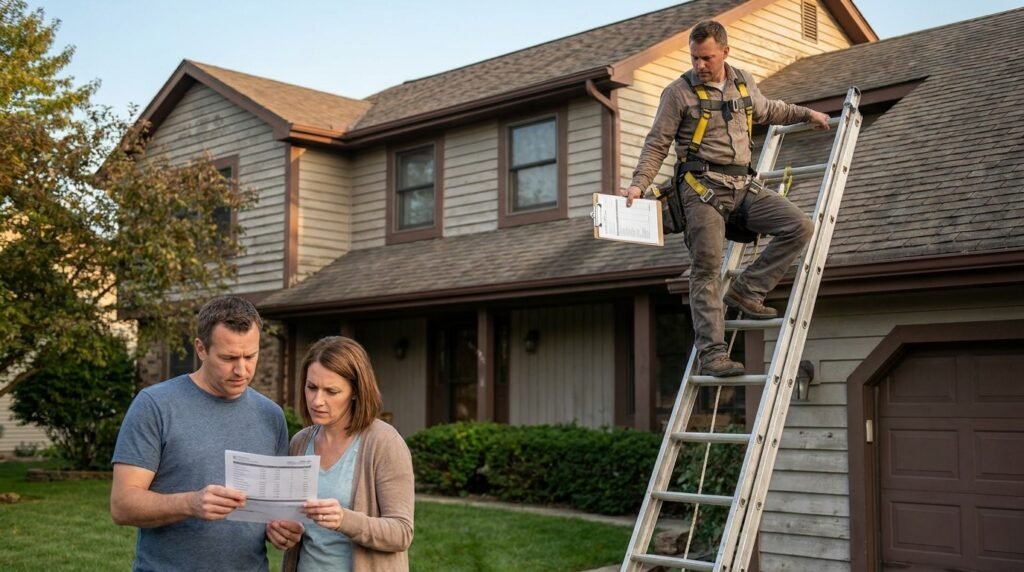
If you’ve gotten a roofing quote recently and felt your stomach drop, you’re not imagining things. Roofing costs are up roughly 12% in 2026, and homeowners across the country are feeling the pinch in different ways depending on where they live and what kind of roof they need.
Whether you’re planning a full roof replacement or just budgeting for an eventual repair, understanding why prices climbed and what you can do about it will save you real money. Let’s break down what’s actually happening in the roofing market this year — and how to navigate it smart.
Why Are Roofing Costs Rising in 2026?
The short answer: it’s a mix of tariffs, manufacturer price hikes, labor shortages, and insurance market pressure — all hitting at once.
1. Tariffs on Steel, Aluminum, and Copper
Roofing materials rely heavily on metal — flashing, fasteners, gutters, and metal roofing panels all use steel, aluminum, or copper. Tariffs on these materials doubled in recent years, pushing metal roofing costs up significantly and rippling into asphalt shingle production costs as well, since even “non-metal” roofs use metal components throughout the system.
2. Manufacturer Price Increases (Twice in One Year)
This is the part that surprised a lot of homeowners. Major shingle manufacturers — GAF, Owens Corning, CertainTeed, and Atlas — raised prices in early 2026, and then raised them again mid-year. That means some contractors had to absorb two separate rounds of material cost increases within the same 12 months, and those costs inevitably get passed down to homeowners.
3. Labor Shortages Are Still a Factor
Skilled roofing labor remains tight in most metro areas. Fewer available crews means contractors can charge more, and project timelines have stretched longer in many regions — especially the Northeast, where winter installation windows are already short.
4. Insurance Claims and Storm Damage
In storm-prone states, insurers are adjusting replacement-cost benchmarks upward, which influences what contractors quote even for non-insurance jobs. When the “standard” cost of rebuilding goes up, it resets pricing expectations across the board.
5. Building Code Upgrades
Many states have updated wind, fire, and hail-resistance codes since older roofs were installed. Bringing a roof up to current code during replacement adds cost — but it’s not optional in many jurisdictions.
How Much Does a Roof Cost in 2026? (National + Regional Breakdown)
Nationally, a full asphalt shingle roof replacement on an average-sized home typically runs into the tens of thousands of dollars, with wide variation based on materials, roof size, and pitch. But the increase — that 12% figure — is really what matters when you’re comparing this year’s quote to what a neighbor paid two or three years ago.
Here’s how the increase tends to break down by region:
| Region | Typical Cost Increase (vs. Prior Years) | Main Drivers |
|---|---|---|
| Southeast | Higher-than-average | Hurricane code requirements, material transport |
| Northeast | Higher-than-average | Labor costs, short installation season |
| West Coast | Highest | High labor costs, seismic and fire-zone requirements |
| Midwest | Moderate | Hail-resistance demand, moderate labor costs |
Quick takeaway: if you live in a coastal or wildfire-prone state, expect the increase to land on the higher end of that range. If you’re in the Midwest, you may see a more moderate bump.
What This Means for Your Roofing Budget
Let’s put this in real dollars. If a roof replacement would have cost you $15,000 a couple of years ago, a 12% increase adds roughly $1,800 to that project. On a larger or premium roofing system, that gap grows even wider.
That’s not pocket change — but it also doesn’t mean you should panic or rush into a decision you’re not ready for. Here’s what actually matters:
Materials Make the Biggest Difference
Asphalt shingles remain the most budget-friendly option, but even shingle pricing has crept up 5-8% per manufacturer round this year. Metal roofing, meanwhile, has seen a much steeper jump due to tariff exposure — something to factor in if you were considering upgrading to metal for durability or energy efficiency.
Timing Your Project Matters More Than Ever
Because manufacturers have been announcing price increases with effective dates (often giving 30-60 days notice), some homeowners have saved real money by locking in quotes before a scheduled hike. Ask your contractor directly: “Is there a manufacturer price increase coming, and can we lock in current pricing?”
Repairs vs. Full Replacement
With costs up across the board, more homeowners are asking whether a repair can buy them another few years instead of a full replacement. This is a smart question to ask — but only if your roofer gives you an honest answer about your roof’s actual remaining lifespan, not just a sales pitch either direction.
How Homeowners Can Save on Rising Roofing Costs
You can’t control tariffs or manufacturer pricing, but you do have leverage. Here’s where to focus:
Get Multiple Quotes — And Ask About Price Locks
Contractors vary more than people expect, even for the same material and scope. A written quote with a price-hold clause protects you if another manufacturer increase hits mid-project.
Ask About Material Substitutions
If your preferred shingle brand just raised prices, a comparable product from a different manufacturer might still be at the older price point. A good contractor will tell you this without you having to ask — but it doesn’t hurt to ask anyway.
Check for Insurance Coverage First
If your roof damage is storm-related, don’t assume it’s automatically a “replace it yourself” cost. Document damage thoroughly and get an adjuster assessment before committing to out-of-pocket work.
Consider Off-Season Scheduling
In many regions, late fall and winter are slower seasons for roofing crews. Contractors sometimes offer better pricing or faster turnaround simply because demand is lower — worth asking about if your roof isn’t in emergency condition.
Don’t Skip the Warranty Conversation
With costs this high, you want assurance the investment lasts. Ask specifically about manufacturer warranty terms and workmanship guarantees — a slightly higher quote with a stronger warranty can be the better long-term value.
Is Now a Good Time to Replace Your Roof?
Honestly, it depends on your situation. If your roof is already showing signs of failure — missing shingles, leaks, sagging, or it’s past its expected lifespan — waiting for prices to “come back down” isn’t a great strategy. Industry analysts largely expect roofing costs to keep climbing through 2026 and into 2027 as tariffs and material inflation remain baked into the market, rather than reversing.
If your roof still has several good years left, this might be the year to focus on maintenance and minor repairs instead, while budgeting ahead for the eventual full replacement.
Frequently Asked Questions
Why did roofing costs go up 12% in 2026?
A combination of tariffs on steel, aluminum, and copper, back-to-back manufacturer price increases from major shingle brands, ongoing labor shortages, and rising insurance replacement-cost benchmarks all contributed to the increase. It’s not one single cause — it’s several pressures hitting the industry at the same time.
How much more will I pay for a roof replacement in 2026 compared to previous years?
On average, homeowners are paying about 12% more than they would have a couple of years ago, though the exact increase varies by region and material choice. Coastal and high-labor-cost states tend to see the steepest jumps, while some inland regions see more moderate increases.
Should I wait to replace my roof until prices go down?
Most industry projections suggest roofing costs will keep rising rather than dropping in the near term, since the underlying tariff and material-cost pressures aren’t temporary. If your roof needs replacement now, waiting could mean paying even more later — though it’s worth getting a professional inspection to confirm the actual urgency of your specific roof.
What roofing material is most affordable in 2026 despite rising costs?
Asphalt shingles remain the most budget-friendly option overall, even though manufacturer prices have increased this year. Metal roofing has seen steeper cost increases due to tariff exposure on steel and aluminum, making it a pricier upgrade than it was a few years ago.