
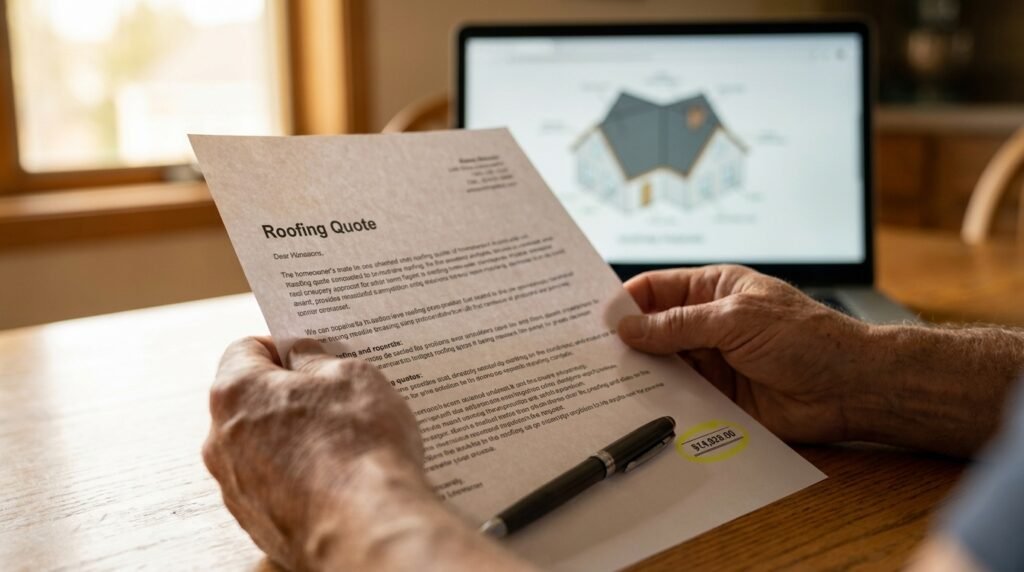
You just got three roofing quotes back, and they couldn’t look more different if they tried.
One is a single page with a bottom-line number. Another runs five pages with terms you’ve never heard of. The third is scribbled on a contractor’s letterhead with almost no detail at all. So which one is actually the best deal?
Here’s the uncomfortable truth: you can’t tell just by looking at the total price. Learning how to read a roofing quote line by line is the only way to know whether you’re comparing apples to apples — or getting quietly set up to overpay.
This guide breaks down every section of a typical roofing quote, explains what each line item actually means, and shows you exactly what red flags to watch for before you sign anything.
Why Roofing Quotes Are So Hard to Compare
Roofing contractors don’t use a standardized format. That’s not always intentional — but it does work in the contractor’s favor when quotes are vague.
A quote that’s missing details isn’t necessarily dishonest. But it does leave room for “surprise” charges once the crew is already on your roof. The fix isn’t finding the cheapest number. It’s understanding what should be included in every quote so you can tell a complete estimate from an incomplete one.
What Is a Roofing Quote, Exactly?
A roofing quote (sometimes called an estimate) is a written document that spells out the scope of work, materials, labor, and total cost for your roofing project. A trustworthy quote should be:
- Itemized — broken into individual cost categories, not one lump sum
- Specific — naming exact materials, brands, and quantities
- In writing — never just a verbal number or a napkin sketch
If a quote fails any of these three tests, that’s your first warning sign.
The Anatomy of a Roofing Quote: Line-by-Line Breakdown
Let’s go through each section you should expect to see, in the order it usually appears.
1. Project Scope and Overview
Before any numbers, a solid quote opens with a plain-language description of the job: full replacement or repair, roof size (in squares — one square equals 100 square feet), roof pitch, and the number of layers being removed. Vague language here (“roof work as discussed”) is a sign the rest of the quote may be just as loose.
2. Tear-Off and Disposal
This covers stripping the old roofing material down to the decking and hauling away the debris.
What to check: Is disposal (dumpster rental, dump fees) itemized separately, or bundled in? If it’s missing entirely, it may reappear later as a surprise “add-on” once the old roof is off.
3. Decking (Sheathing) Repair
Once the old roof is removed, some plywood or OSB decking may be rotted or damaged and need replacing.
What to check: Look for a per-sheet or per-square-foot price, not just a vague “as needed” note with no cap. This single line item is where costs most commonly balloon mid-project — decide now, before work starts, how you want unexpected rot handled and priced.
4. Underlayment
This is the protective barrier — usually synthetic felt or ice-and-water shield — installed directly on the decking, beneath the shingles or other roofing material.
What to check: The quote should name the specific type and brand. “Underlayment included” without detail could mean a bargain-bin product that won’t perform the same as a premium synthetic barrier, especially in colder climates.
5. Shingles or Primary Roofing Material
This is usually the single biggest line item and covers the actual roofing material: architectural shingles, 3-tab shingles, metal panels, tile, or another material.
What to check: Brand name, product line, color, and warranty tier should all be spelled out. “Architectural shingles” alone tells you almost nothing — a budget line and a premium designer line can carry the same generic label but very different price points and lifespans.
6. Flashing
Flashing is the metal installed around chimneys, vents, skylights, and roof valleys to prevent water intrusion. It’s one of the most common sources of roof leaks when installed poorly — or skipped altogether.
What to check: Confirm flashing replacement is included, not just reused from the old roof. Reusing old, corroded flashing to cut costs is a classic shortcut that leads to leaks within a year or two.
7. Ventilation
Proper attic ventilation (ridge vents, soffit vents, turbine vents) affects your roof’s lifespan and your energy bills.
What to check: If your current ventilation is inadequate, a quality quote will note upgrades here rather than ignoring the issue entirely.
8. Ridge Cap and Accessories
Ridge caps, drip edge, and starter strips finish off the edges and peak of the roof. These smaller components are easy to leave off a quote to lower the sticker price.
What to check: Ask directly whether drip edge and starter strip are included — contractors sometimes treat these as optional upsells.
9. Labor
Labor should be broken out from materials, either as a flat project rate or itemized by crew size and days on-site.
What to check: A detailed quote might separate labor by task (tear-off crew vs. installation crew) rather than one unexplained number.
10. Permits and Code Compliance
Most municipalities require a permit for a roof replacement, and code requirements can add cost (extra ventilation, ice-dam barriers in colder regions, and so on).
What to check: Confirm who pulls the permit — the contractor or you — and that the fee is included in the total, not billed separately later.
11. Warranty Information
There are two separate warranties on any roofing project:
- Manufacturer’s warranty — covers material defects
- Workmanship warranty — covers the contractor’s installation
What to check: Both should be listed with specific terms and length. A quote that only mentions the manufacturer’s warranty is leaving out protection against installation errors, which is where most roof failures actually originate.
12. Cleanup and Nail Sweep
This covers debris removal and a magnetic sweep of the yard for stray nails — a small detail, but a meaningful one if you have kids, pets, or park cars near the house.
13. Payment Terms
Finally, look at how and when payment is structured. A common, reasonable structure is a deposit up front, a payment when materials are delivered, and a final payment on completion.
What to check: Be cautious of any contractor asking for full payment upfront, and get milestone payments tied to specific project stages in writing.
Red Flags to Watch For in Any Roofing Quote
- Vague, non-itemized totals with no breakdown of materials vs. labor
- Missing warranty terms or warranties described only verbally
- Unusually low pricing compared to other quotes — often a sign of corner-cutting or a bait-and-switch
- No proof of license or insurance attached or referenced
- High-pressure tactics, like discounts that expire “today only”
- “As needed” pricing on decking repair with no upper limit
If you spot two or more of these, treat that quote with real skepticism.
How to Compare Multiple Roofing Quotes Fairly
Comparing quotes by the bottom-line number alone is the fastest way to end up disappointed. Instead:
- Line up each quote’s 13 categories side by side (a simple spreadsheet works well).
- Flag anything missing from any single quote — that’s your negotiation point.
- Confirm brand names and warranty terms match across quotes before comparing price.
- Ask each contractor to explain any line item you don’t understand. A reputable roofer will walk you through it without hesitation.
- Get at least three quotes minimum before deciding.
The lowest price rarely wins once you account for what’s actually included.
Questions to Ask Before You Sign
- Is this price fixed, or can it change once work begins?
- What happens if decking damage is found once tear-off starts?
- Are permits and disposal fees included in this total?
- What’s covered under the workmanship warranty, and for how long?
- Who is my point of contact if something goes wrong mid-project?
Final Thoughts
A roofing quote isn’t just a price tag — it’s a map of exactly what’s going onto your home and what protection you have if something goes wrong. Once you know how to read a roofing quote line by line, the confusing jargon turns into a checklist you control.
Take your time, ask questions, and don’t be afraid to walk away from a quote that can’t explain itself. Your roof will be over your head for the next 20-plus years — it’s worth ten extra minutes of scrutiny now.
Frequently Asked Questions
What’s the difference between a roofing quote and a roofing estimate?
They’re often used interchangeably, but a “quote” typically implies a firmer, itemized price, while an “estimate” may be a rougher approximation subject to change once the roof is inspected up close.
Why do roofing quotes vary so much between contractors?
Differences usually come from material quality, labor rates, company overhead, and how thoroughly each contractor inspected the existing roof before pricing the job.
Should I always choose the cheapest roofing quote?
Not necessarily. A lower price that leaves out flashing replacement, permits, or a workmanship warranty can end up costing more in repairs down the road.
How many roofing quotes should I get before deciding?
Most experts recommend getting at least three written, itemized quotes so you can compare line items fairly and spot outliers on either end.