
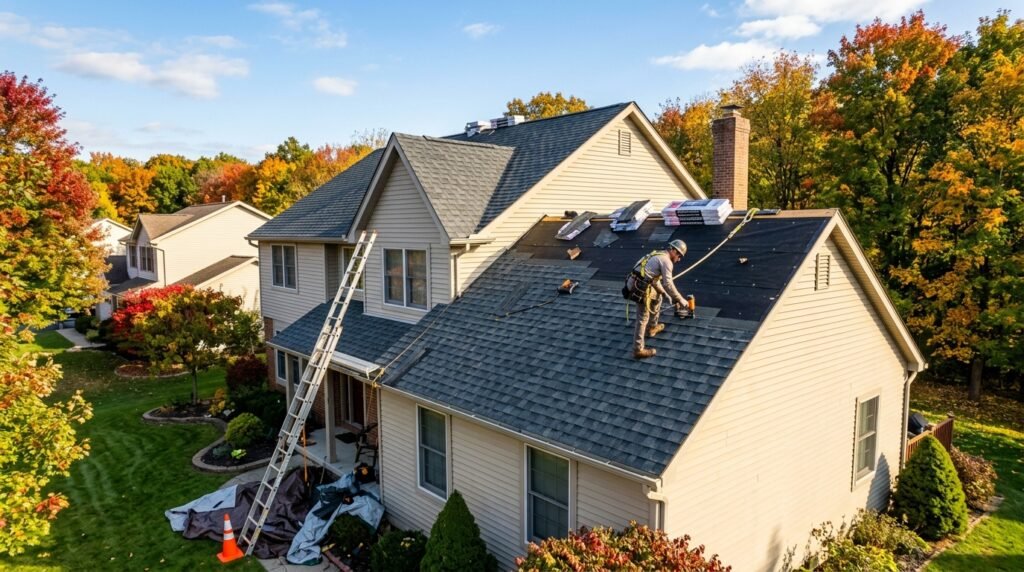
Is your roof showing signs of wear, but you’re not sure when to schedule the replacement? Timing matters more than most homeowners realize.
The best time to replace your roof isn’t just about convenience — it directly affects your costs, the quality of installation, and how long your new roof will last. Choosing the wrong season can mean higher prices, rushed work, or even weather-related complications during installation.
In this guide, we’ll break down the pros and cons of replacing your roof in each season, what it costs at different times of year, and how to plan your project so you get the best value and the highest-quality results.
Why Timing Matters for Roof Replacement
Roofing contractors deal with fluctuating demand throughout the year. When demand spikes — typically after storms or during peak building seasons — prices rise and scheduling gets tight. When demand drops, you often get better rates and more attentive service.
Weather conditions also affect how well roofing materials install and seal. Asphalt shingles, for example, need specific temperature ranges to seal properly. Install them in extreme heat or cold, and you risk a less durable roof.
That’s why understanding seasonal patterns is key to making a smart decision.
Best Time to Replace Your Roof: Season-by-Season Breakdown
Fall: The Ideal Season for Roof Replacement
Most roofing experts agree that early to mid-fall (September through November) is the best time to replace your roof.
Why fall works so well:
- Mild temperatures allow shingles to seal properly without cracking or becoming too soft.
- Contractors have typically cleared their summer backlog, so scheduling is easier.
- You’ll have a solid roof in place before winter storms and snow arrive.
- Lower humidity reduces the risk of moisture getting trapped under new shingles.
The only downside? Fall is a popular time for roof replacement, so it’s wise to book early — ideally by late summer — to secure your preferred contractor and avoid a last-minute rush.
Spring: A Close Second Choice
Spring (April through June) is another strong option, especially if you missed the fall window.
Advantages of spring roofing:
- Temperatures are moderate, similar to fall conditions.
- Contractors are just ramping up after winter, so scheduling may be more flexible early in the season.
- You’ll be prepared for summer storms and heavy rain.
Keep in mind that spring can bring unpredictable rain showers, which may cause scheduling delays. Always build a few extra days of buffer into your project timeline.
Summer: Convenient but Costly
Summer is the busiest season for roofing companies, which means it’s also usually the most expensive time to replace your roof.
Pros of summer roofing:
- Long daylight hours mean faster project completion.
- Dry weather in many regions reduces rain delays.
Cons of summer roofing:
- High demand drives up prices.
- Extreme heat can make shingles too pliable, leading to scuffing or improper sealing.
- Contractors are booked weeks or even months in advance.
If you must replace your roof in summer, try to schedule installation for early morning to avoid peak heat and protect shingle integrity.
Winter: Possible, But Proceed with Caution
Winter roof replacement is generally the least recommended option — but it’s not impossible, especially in milder climates.
Why winter is tricky:
- Cold temperatures can make shingles brittle and prone to cracking during installation.
- Snow and ice create safety hazards for roofing crews.
- Adhesive sealants may not bond properly in freezing conditions.
That said, winter often brings lower prices due to reduced demand. If your roof is leaking or severely damaged, don’t wait for “ideal” weather — a professional roofer can still complete a safe, effective winter replacement using cold-weather techniques and materials.
Seasonal Roof Replacement Cost Guide
Understanding how pricing shifts throughout the year can help you budget smarter. Here’s a general cost comparison (actual prices vary by region, roof size, and material):
| Season | Relative Cost | Availability | Weather Risk |
|---|---|---|---|
| Fall | Moderate | High demand, book early | Low |
| Spring | Moderate | Good availability | Moderate (rain) |
| Summer | Highest | Limited slots | Low-moderate (heat) |
| Winter | Lowest | High availability | Moderate-high (cold/snow) |
On average, a full asphalt shingle roof replacement in the U.S. costs between $5,500 and $12,000, depending on roof size, materials, and labor rates in your area. Off-season replacements (like winter) can save homeowners 10–20% compared to peak summer pricing.
Signs You Shouldn’t Wait for the “Perfect” Season
While timing your roof replacement strategically can save money, some situations require immediate action regardless of season:
- Active leaks causing interior water damage
- Missing or severely curling shingles
- Visible sagging in the roofline
- Mold or rot in the attic
- Roof age exceeding 20–25 years
If you’re dealing with any of these red flags, don’t delay just to hit the “ideal” season — the cost of water damage or structural issues will far outweigh any seasonal savings.
Tips for Getting the Best Deal on Roof Replacement
- Book early. Schedule your project at least a month or two before peak season to lock in better rates and availability.
- Get multiple quotes. Compare at least three contractors to understand fair market pricing in your area.
- Ask about off-season discounts. Many roofers offer lower rates in late winter or early spring to fill their schedules.
- Check contractor reviews and licensing. A cheaper quote isn’t worth it if the workmanship is poor.
- Consider material lifespan. Investing in higher-quality shingles or metal roofing can reduce how often you need replacements.
Final Thoughts
So, when is the best time to replace your roof? For most homeowners, early fall offers the best combination of mild weather, contractor availability, and long-term durability. Spring is a solid backup option, while summer and winter come with trade-offs in cost and installation conditions.
Ultimately, the best time is also determined by your roof’s current condition. If you’re seeing warning signs of damage, don’t wait for the “perfect” season — timely repairs or replacement will always beat weather-related savings.
Plan ahead, get multiple quotes, and choose a reputable, licensed roofing contractor to ensure your new roof performs well for decades to come.
Frequently Asked Questions (FAQ)
Q1: What is the cheapest season to replace a roof?
Winter typically offers the lowest prices due to reduced demand, though cold weather can complicate installation. Late fall or early spring often provide a good balance of moderate pricing and safer working conditions.
Q2: How long does a roof replacement take?
Most residential roof replacements take 1 to 3 days, depending on roof size, material type, and weather conditions during installation.
Q3: Can you replace a roof in the rain?
No, roofing materials should not be installed in wet conditions, as moisture can compromise the seal and lead to leaks. Contractors typically pause work during rain and resume once conditions are dry.
Q4: How do I know if my roof needs to be replaced?
Common signs include curling or missing shingles, granule loss, sagging areas, leaks, and a roof age of 20+ years. A professional inspection can confirm whether repair or full replacement is needed.