
Your roof protects everything under it. A bad install can mean leaks, mold, and thousands of dollars in repairs. A good one can last 20 to 30 years.
So how do you tell the pros from the pretenders? Start with the right questions to ask a roofer before you sign anything. This 25-point checklist covers licensing, insurance, pricing, materials, warranties, and more. Print it, save it, or keep it on your phone during every estimate.
Why the Right Questions to Ask a Roofer Matter
Roofing is one of the most expensive home projects you will ever fund. It is also one of the most scam-prone. After a big storm, “storm chasers” knock on doors, take deposits, and disappear.
Asking smart questions does three things:
- Filters out unqualified contractors fast
- Protects you legally and financially if something goes wrong
- Sets clear expectations on timeline, cost, and quality
A good roofer will welcome your questions. If someone gets defensive or vague, treat that as a red flag.
How to Use This Roofing Contractor Checklist
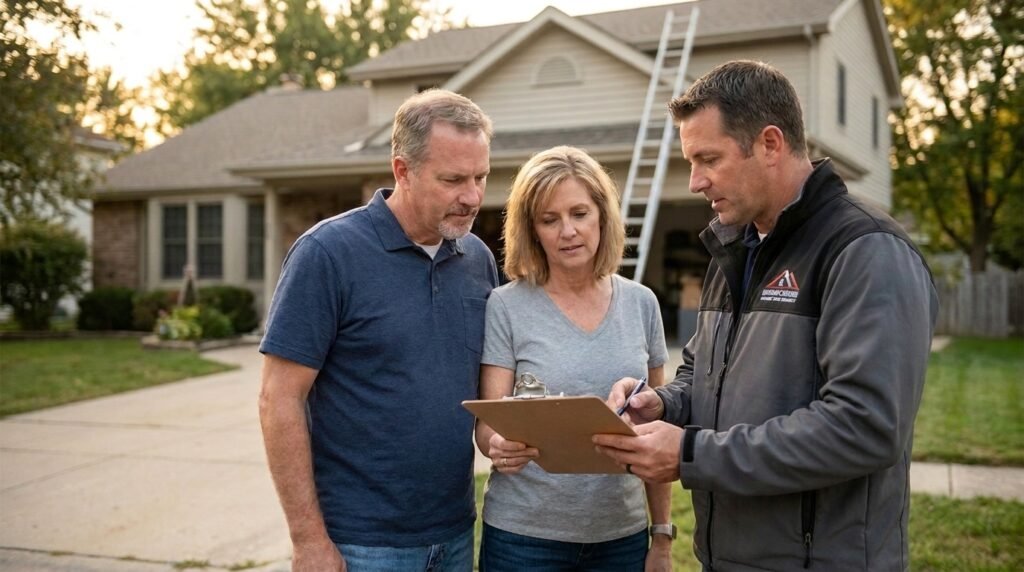
Get at least three written estimates. Ask every contractor the same questions and compare the answers side by side. Write down who answered clearly and who dodged.
Let’s start.
Questions About Licensing, Insurance, and Credentials
These are your non-negotiables. If a roofer fails here, move on.
1. Are you licensed to work in my state and city?
Licensing rules vary by state and sometimes by city. Ask for the license number, then verify it with your state licensing board. Don’t take their word for it.
2. Do you carry general liability insurance?
Liability insurance covers damage to your property. Ask for a copy of the certificate. A common benchmark is at least $1 million in coverage.
3. Do you carry workers’ compensation insurance?
This one gets overlooked. If a worker falls off your roof and the contractor has no workers’ comp, you could be on the hook for medical bills. Ask for proof, and call the insurer to confirm the policy is active.
4. Are you certified by any shingle manufacturers?
Manufacturer certifications (like GAF or Owens Corning) show the roofer has been trained and vetted. They can also unlock stronger warranties.
5. Do you belong to any trade associations or have a BBB profile?
Membership isn’t everything, but it shows the company is invested in its reputation. Check complaints and how they were resolved.
Questions About Experience and Reputation
6. How long have you been in business under this name?
Look for a stable local track record. Companies that change names often may be dodging bad reviews.
7. Do you have a local office and a permanent address?
A real address means you know where to find them. A P.O. box or out-of-state number is a warning sign.
8. Can you give me three recent local references?
Call them. Ask if the crew showed up on time, cleaned up, and stuck to the quote. Even better, drive by a finished job.
9. Have you worked on roofs like mine?
Roof pitch, material, and age all affect the job. A contractor who mostly installs asphalt shingles may not be the best fit for tile, slate, or metal.
10. What do your online reviews say, and how do you handle bad ones?
Everyone gets a bad review eventually. What matters is how they respond. Look for patterns across Google, Yelp, and Facebook.
Questions About the Estimate and Pricing
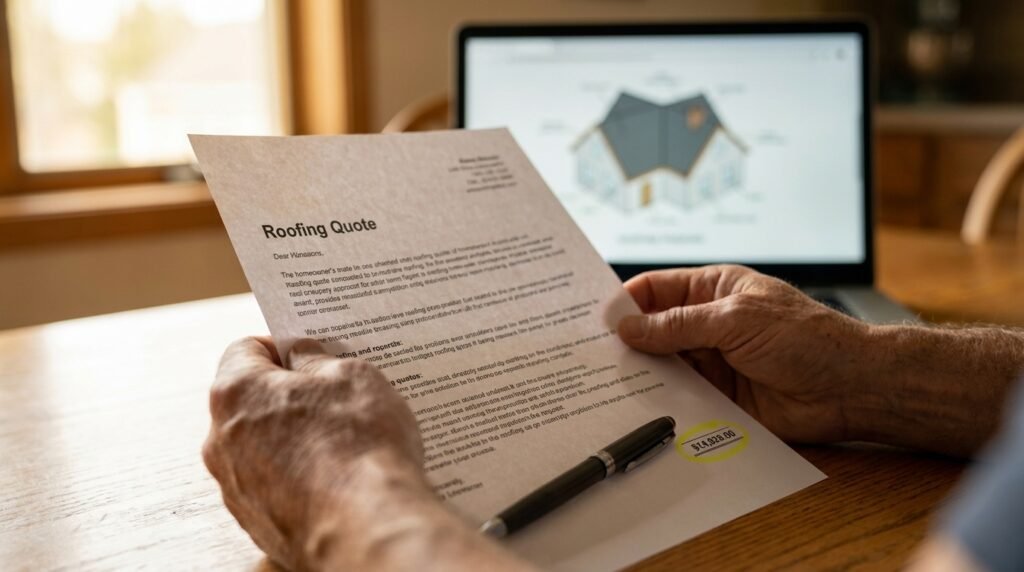
11. Is your estimate free, written, and itemized?
Insist on a written quote that breaks out labor, materials, tear-off, disposal, and permits. Vague one-line quotes make it hard to compare bids.
12. What’s included in the price, and what could cost extra?
Ask about rotted decking, flashing, vents, and gutters. Hidden add-ons are where “cheap” quotes get expensive.
13. How do you handle payment and deposits?
Be cautious about large upfront payments. A small deposit for materials is normal. Many states cap deposits by law. Never pay the full amount before work is done.
14. Will you work with my insurance company?
If you’re filing a storm claim, ask whether they’ll meet your adjuster on the roof. Be wary of anyone who offers to “waive your deductible.” That can be insurance fraud.
Questions About Materials and Workmanship
15. What roofing materials do you recommend, and why?
A good roofer explains the trade-offs between asphalt, metal, tile, and other options in plain language. They should consider your climate, budget, and home style, not just push the highest-margin product.
16. Do you tear off the old roof or install over it?
Layering new shingles over old ones (a “roof-over”) can save money, but it can also hide problems and shorten the roof’s life. In most cases, a full tear-off is the better choice. Ask what they recommend for your home.
17. How will you protect my property during the job?
Ask about tarps for landscaping, magnets for nails, and daily cleanup. Pros plan for this. Amateurs leave nails in your driveway.
18. Who will actually do the work: your crew or subcontractors?
Neither is automatically bad. The key is accountability. Ask who supervises the job and whether subcontractors are insured too.
What about permits?
Most areas require a permit for a full roof replacement. A reputable roofer pulls it for you. If they suggest skipping it, walk away.
Questions About Warranties and Guarantees
19. What warranties do you offer?
There are two kinds, and many homeowners mix them up:
- Manufacturer warranty: Covers defects in the materials
- Workmanship warranty: Covers installation errors, and comes from the contractor
Workmanship warranties are where many leaks are caught. Ask how many years it lasts and get it in writing.
20. Is your warranty transferable if I sell my home?
A transferable warranty can boost resale value. Ask about fees and conditions for transferring it.
21. What happens if there’s a problem after the job is done?
Find out who to call, how fast they respond, and whether they’ve honored warranties in the past. A warranty is only as good as the company behind it.
Questions About Timeline and Communication
22. When can you start, and how long will the job take?
Most residential roofs take one to three days, though weather and size matter. Good contractors give a realistic window, not a rushed promise.
23. What happens if the weather delays the project?
Rain happens. Ask how they’ll protect your open roof and how they’ll keep you updated on schedule changes.
24. Who is my point of contact during the project?
You want one reliable person who answers calls and texts. Poor communication is the most common homeowner complaint in the industry.
25. Can I have everything in writing in a signed contract?
The contract should list the scope of work, materials (brand and color), total price, payment schedule, start and end dates, warranty terms, and cleanup. If it’s not in the contract, it doesn’t exist.
Red Flags to Watch for When Hiring a Roofer
Even with a great checklist, trust your gut. Be careful if a roofer:
- Pressures you to sign “today only”
- Shows up uninvited after a storm
- Asks for full payment upfront
- Can’t show proof of insurance or a license
- Offers a price far below every other bid
- Won’t put anything in writing
A low bid can be the most expensive one if it leads to a failed roof in five years.
How to Compare Roofing Quotes the Smart Way
Once you have your answers, lay your estimates out in a simple table. Compare:
- Total price and what it includes
- Materials and brands
- Warranty length and type
- Insurance and licensing proof
- Timeline and communication style
The best choice is rarely the cheapest. It’s the contractor who is clear, insured, and confident in their work.
Final Thoughts
Hiring a roofer doesn’t have to feel overwhelming. With these questions to ask a roofer, you can spot red flags early and choose a contractor you trust.
Remember the big three: verify licensing and insurance, get everything in writing, and never rush the decision. Take this checklist to your next estimate and let the answers guide you. Your future self, dry and comfortable under a solid roof, will thank you.
Frequently Asked Questions (FAQ)
What are the most important questions to ask a roofer?
The most important ones cover licensing, liability insurance, workers’ comp, written warranties, and a detailed written estimate. These protect you from financial and legal risk.
How many quotes should I get before hiring a roofer?
Get at least three written quotes. This helps you spot unusually high or low prices and compare materials, warranties, and service quality.
How much deposit should I give a roofer?
Many contractors ask for 10% to 30% upfront, and some states set legal limits. Avoid paying in full before the job is complete, and pay the final balance only after you’re satisfied.
How can I verify a roofer’s license and insurance?
Look up the license number on your state licensing board’s website. For insurance, ask for the certificate and call the insurer directly to confirm the policy is current.