
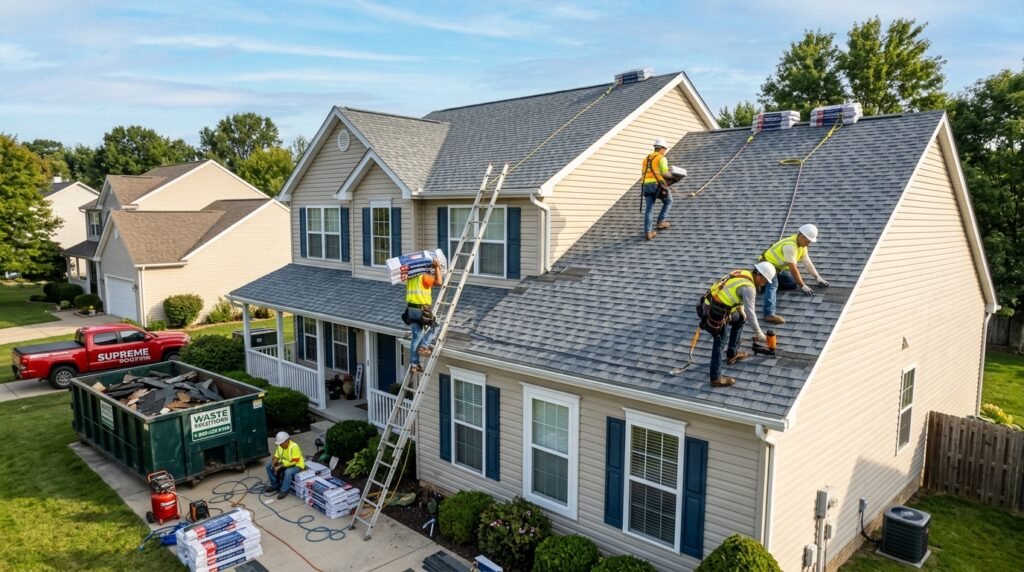
You just got a quote. The price looks fair. But one big question is still on your mind: how long does a roof replacement take?
It matters. Your home is open to the weather during the job. Your driveway becomes a work zone. Your family’s routine gets shaken up.
The short answer: most roof replacements take 1 to 3 days for asphalt shingles. Metal, tile, and slate can take a week or more. The full process, from signing a contract to the final cleanup, often takes 2 to 6 weeks.
Let’s break it down by roof type so you know what to expect.
How Long Does a Roof Replacement Take? The Quick Answer
Here is a simple cheat sheet for the average home (about 1,500 to 2,500 square feet of roof):
| Roof Type | Typical Installation Time |
|---|---|
| Asphalt shingles | 1–3 days |
| Metal (screw-down panels) | 2–5 days |
| Standing seam metal | 3–7 days |
| Wood shake | 3–7 days |
| Synthetic (composite) | 2–4 days |
| Concrete or clay tile | 5–10 days |
| Slate | 1–3 weeks |
| Flat roof (TPO, EPDM, modified bitumen) | 1–4 days |
These are working days on site. Weather, roof size, and crew size can shift them. We’ll cover that below.
Roof Replacement Timeline by Roof Type
Different materials need different skills and different steps. That is why the timeline changes so much.
Asphalt Shingle Roof: 1 to 3 Days
Asphalt shingles are the most popular roofing material in the U.S. They are also the fastest to install.
A crew of five to eight workers can often finish an average home in one to two days. A large or steep roof, or one with many valleys and dormers, may need three.
Why it’s fast:
- Shingles are light and easy to carry.
- Crews install them in large, repeating patterns.
- Most roofers work with them every day.
Metal Roof: 2 to 7 Days
Metal roofing takes longer than shingles. Each panel must be measured and fitted with care.
Screw-Down Metal Panels
These exposed-fastener panels are simpler. Most homes take two to five days.
Standing Seam Metal
This style has hidden fasteners and clean lines. It looks sleek, but it takes more skill. Expect three to seven days. Panels are often cut to length for your roof, so precision matters.
Wood Shake Roof: 3 to 7 Days
Wood shakes are laid by hand, one piece at a time. That takes patience. Some counties also require fire-rated treatments or extra underlayment, which can add time.
Synthetic or Composite Roof: 2 to 4 Days
Synthetic slate and shake products mimic natural materials but weigh less. They install a bit slower than asphalt and faster than the real thing.
Clay or Concrete Tile Roof: 5 to 10 Days
Tile is heavy. Crews must move pallets onto the roof and often reinforce the structure first. Each tile is set and secured by hand.
Tile also needs careful flashing at every edge and penetration. That is why a tile roof can take one to two weeks.
Slate Roof: 1 to 3 Weeks
Slate is the premium choice. It can last over 100 years. It is also the slowest to install.
Slate is heavy and fragile. Each piece must be cut, drilled, and nailed by hand. Only crews with slate experience should do this work. Rushing it would be a costly mistake.
Flat or Low-Slope Roof: 1 to 4 Days
Flat roofs on homes and small commercial buildings use materials like TPO, EPDM, or modified bitumen. Most jobs take one to four days. Larger commercial roofs can take longer.
Cure time for adhesives can add a bit of waiting, especially in cold weather.
The Roof Replacement Process: Step by Step
Knowing the steps helps you see where the time goes.
Step 1: Inspection and Estimate (1–3 Days)
A roofer inspects your roof, measures it, and gives you a quote. Get at least three quotes. Ask about the schedule, too.
Step 2: Contract, Permits, and Materials (1–4 Weeks)
This is the “hidden” part of the timeline. Many people forget it.
- Permits: Some cities approve them in a day. Others take one to two weeks.
- Material orders: Common shingles ship fast. Special colors, metal panels, and tile can take two to four weeks or more.
- Scheduling: Good roofers are often booked out. Spring and fall are the busiest seasons.
Step 3: Tear-Off (Half a Day to 2 Days)
The crew removes old roofing down to the deck. For most homes, this takes a day or less. Multiple layers of old roofing add time.
Step 4: Deck Inspection and Repairs (A Few Hours to 2 Days)
Once the old roof is off, the crew checks the wood underneath. Rotted or damaged boards must be replaced. This step often causes surprise delays, so ask your roofer how they handle it.
Step 5: Underlayment, Flashing, and Ventilation
The crew lays a water-resistant barrier, installs flashing around chimneys and vents, and adds drip edge. These steps protect your home from leaks. Good roofers never skip them.
Step 6: Installing the New Roofing
This is the main event. The times in the table above apply here.
Step 7: Cleanup and Final Inspection (Half a Day)
The crew removes debris and runs a magnet over your yard to catch stray nails. Then comes a final walkthrough. Some towns also need an official inspection.
What Affects How Long a Roof Replacement Takes?
Two roofs made of the same material can take very different amounts of time. Here is why.
Roof Size
Roofs are measured in “squares.” One square equals 100 square feet. A 25-square roof will go much faster than a 50-square roof.
Roof Pitch and Complexity
Steep roofs are slower and less safe to work on. Crews need extra gear. Many valleys, hips, skylights, and chimneys also slow things down.
Weather
Rain, high wind, and extreme heat or cold can all stop work. Roofers will not install shingles in a downpour. Wet decking can trap moisture and cause problems later.
Tip: Plan for a few “buffer” days. It’s rare for weather to cooperate perfectly.
Crew Size and Experience
A larger, experienced crew works faster. But bigger isn’t always better. A well-run crew of six can beat a messy crew of twelve.
Number of Old Layers
Tearing off one layer is quick. Two or three layers take much longer. Some areas limit how many layers a roof can have.
Hidden Damage
Rot, mold, or pest damage can turn a two-day job into a five-day job. It’s better to fix it now than to cover it up.
Permits and Inspections
Delays at the city office are out of your roofer’s hands. Ask how long permits usually take in your area.
Insurance Claims
If a storm damaged your roof, your insurance company may need to approve the work first. Claims can add days or weeks before the crew even starts.
Best Time of Year to Replace a Roof
Timing can shape your schedule.
- Spring and fall: Mild weather makes these ideal. But roofers get busy, so book early.
- Summer: Long days help crews finish faster. Extreme heat can be tough on shingles and workers.
- Winter: Cold weather can make shingles brittle and stop adhesives from sealing. Jobs are still possible in mild regions.
Off-season slots may be easier to book. Some roofers even offer better prices.
Can You Speed Up a Roof Replacement?
Yes, in some cases. Here are a few smart moves:
- Order materials early. Special orders cause the longest waits.
- Choose a common material. Asphalt shingles are the fastest to source and install.
- Get permits started right away. Ask your roofer to file them as soon as you sign.
- Clear the area. Move cars, patio furniture, and plants away from the house.
- Book off-peak. Late winter or early summer may open up dates.
- Approve repairs fast. If the crew finds rot, a quick decision keeps things moving.
A word of caution: never pay extra to rush a job if it means skipping steps. A roof done right lasts decades. A roof done fast may leak in a year.
What to Expect During Your Roof Replacement
Roofing is loud and messy. Here’s how to prepare.
Noise and Disruption
Expect hammering, nail guns, and heavy footsteps overhead. Pets and small children may find it stressful.
Protect Your Home
- Take down wall hangings. Vibrations can shake them loose.
- Cover attic items to keep dust off.
- Move cars out of the garage or driveway.
Stay in Touch
A good roofer gives you updates. Ask for a start date, an expected end date, and a plan for bad weather.
How to Choose a Roofer Who Sticks to the Schedule
A fast roofer isn’t always a good one. Look for these signs:
- Licensed and insured
- Clear written timeline in the contract
- Good reviews that mention on-time work
- Manufacturer certifications
- A written warranty on both materials and labor
Ask this simple question: “What could delay my project, and how will you handle it?” An honest answer shows real experience.
How Long Does a Roof Replacement Take? Final Thoughts
So, how long does a roof replacement take? For most homes with asphalt shingles, the work itself is done in one to three days. Metal, tile, and slate need more time, from a few days to a few weeks.
Remember the “before” and “after” parts too. Permits, material orders, and weather can stretch the total timeline to several weeks.
The best move is simple. Get a written schedule, plan for a few extra days, and pick a roofer who values quality over speed. Your roof protects everything under it. It’s worth doing right.
Ready to get started? Contact a few local, licensed roofers, ask for a timeline in writing, and compare. Your new roof is closer than you think.
Frequently Asked Questions (FAQs)
How long does a roof replacement take for an average house?
For an average home with asphalt shingles, a roof replacement takes one to three days. The full process, from contract to cleanup, often takes two to six weeks because of permits, material delivery, and scheduling.
Can a roof be replaced in one day?
Yes. Many asphalt shingle roofs on smaller, simple homes can be replaced in a single day with a full crew and good weather. Larger or more complex roofs usually take two or three days.
How long does it take to replace a roof after storm damage?
Repairs may start within days if damage is minor. Full replacements often take longer because of insurance approval, high demand for roofers, and material shortages after big storms. Plan for several weeks in total.
Can you live in your house during a roof replacement?
Yes. Most homeowners stay home during the work. Expect loud noise and some dust. If you work from home or have pets, you may want to spend the day elsewhere.