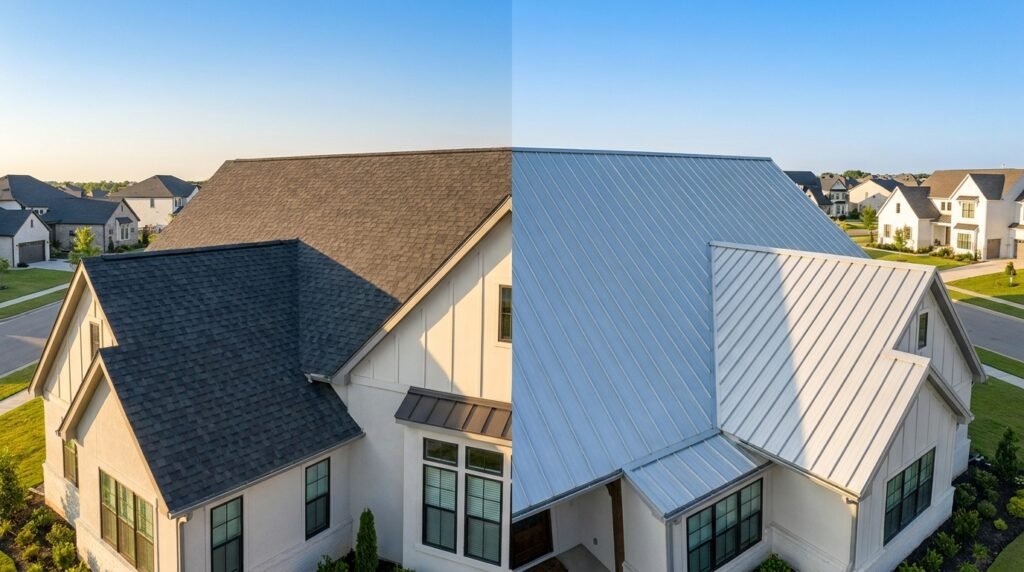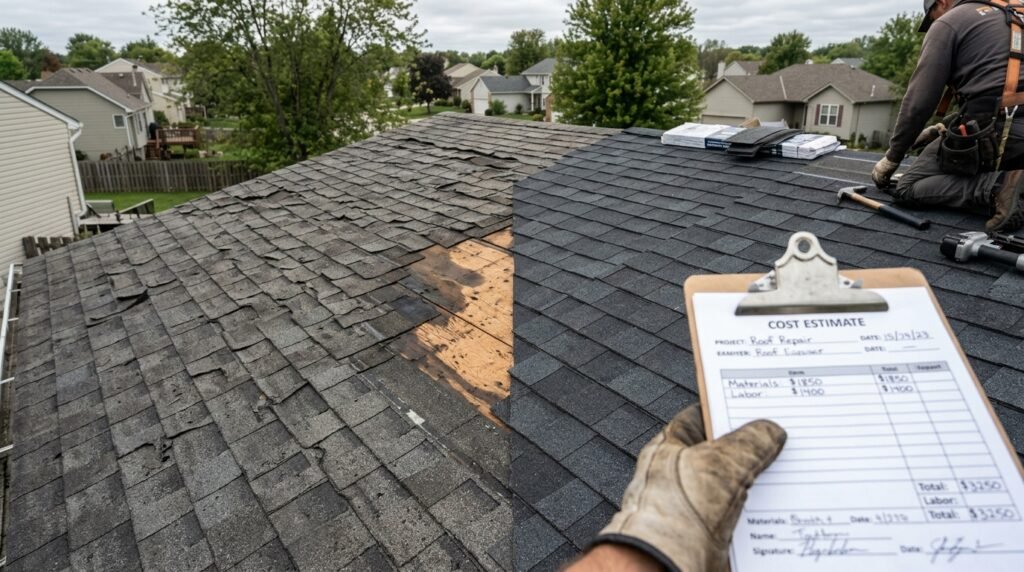
Your roof is aging, and a contractor just offered you two options. One is a full tear-off. The other is a cheaper roof-over, where new shingles go right on top of the old ones.
So which one is smarter? The answer depends on your roof’s condition, your local building code, and how long you plan to stay in the house.
This guide compares a new roof vs roof-over on cost, code, lifespan, and risk. By the end, you’ll know which choice fits your home.
What Is the Difference Between a New Roof and a Roof-Over?
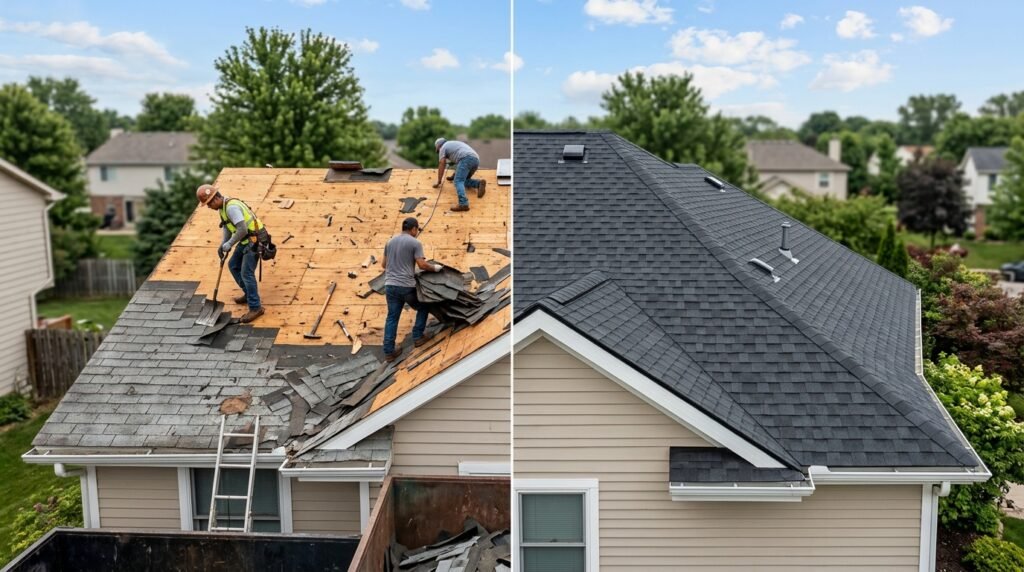
Full Roof Replacement (Tear-Off)
In a full replacement, the crew strips all the old roofing down to the wooden deck. They inspect the deck, repair any damage, and install new underlayment, flashing, and shingles.
Roof-Over (Re-Roof, Overlay, or Recover)
A roof-over installs new shingles directly on top of the existing layer. No tear-off, less labor, and less waste going to the landfill.
People use “re-roof” for both options, which causes confusion. Always ask a contractor to say plainly whether they mean a tear-off or an overlay.
New Roof vs Roof-Over Cost: How Much Will You Save?
Cost is the main reason homeowners consider a roof-over. Typical US figures for asphalt shingles are below. Your price will depend on region, roof size, pitch, and the contractor.
| Factor | Full Replacement | Roof-Over |
|---|---|---|
| Typical cost (average home) | Roughly $6,000–$13,000 | Roughly $4,500–$10,000 |
| Cost per square foot | About $4.50–$8 | About $3.50–$6.50 |
| Labor | Higher | Lower |
| Disposal fees | Yes | Minimal |
| Time on the job | 1–3 days | 1–2 days |
Where the Savings Come From
A roof-over skips the tear-off labor and the dumpster. That often saves $1,000 to $3,000 on an average home.
Hidden Costs of a Roof-Over
The savings can disappear later:
- Shorter lifespan. An overlay often wears out sooner because heat gets trapped.
- Future tear-off. The next crew must remove two layers instead of one.
- Hidden damage. Rotted decking stays hidden until it causes a leak.
A cheap fix today can become a more expensive job in ten years. Ask yourself whether you’d rather save now or pay once.
Building Code: Is a Roof-Over Even Legal?
Often yes, but with limits. This is where many homeowners get surprised.
The Two-Layer Rule
Most US jurisdictions follow the International Residential Code (IRC), which generally allows only two layers of roofing total. If your roof already has two layers, a tear-off is usually required.
When Code Requires a Tear-Off
A tear-off is generally required when:
- The roof already has two or more layers
- The existing roofing is water-soaked or badly deteriorated
- The old roof is wood shake, slate, clay, or cement tile
- The new roofing isn’t compatible with the old material
Check Local Rules and Permits
Cities and counties can be stricter than the model code. Some ban overlays entirely. Others require permits and inspections for any re-roof. Call your local building department before you sign anything.
Pros and Cons of a Roof-Over
Pros
- Lower upfront cost
- Faster installation
- Less mess and less landfill waste
- Less disruption inside the home, since there’s less banging and debris
Cons
- Hides underlying problems like rot, leaks, or mold
- Adds weight, roughly 2–3 pounds per square foot per layer
- Traps heat, which can shorten shingle life
- Creates a less smooth finish if the old roof is uneven
- May affect warranties, since some manufacturers limit coverage on overlays
- Makes the next replacement more costly
Pros and Cons of a Full Roof Replacement
Pros
- Lets the contractor inspect and repair the roof deck
- Gives a flat, clean surface for the new shingles
- Usually qualifies for the strongest manufacturer warranties
- Often lasts longer, commonly 20–30 years for quality asphalt shingles
- Can raise resale value and buyer confidence
Cons
- Higher upfront cost
- Longer, messier job
- More waste to dispose of
Which Is Better for Your Home? Key Factors to Consider
1. Condition of the Existing Roof
Look at the current roof first. If it’s curling, leaking, or has soft spots, an overlay is a bad idea. A roof-over only makes sense when the old layer is flat, dry, and in decent shape.
2. Number of Existing Layers
One layer? An overlay may be allowed. Two layers? You almost certainly need a tear-off.
3. How Long You’ll Stay
Selling in two or three years on a tight budget? A roof-over might be practical. Staying for the long haul? A full replacement usually gives better value.
4. Roof Material
Overlays are mostly an asphalt shingle option. Metal, tile, and slate roofs have different rules. Some metal roofing can go over old shingles, but you should check code and manufacturer guidance first.
5. Climate
In hot climates, trapped heat from two layers can age shingles faster. In snowy regions, the extra weight and hidden moisture can matter more. Talk with a local roofer who knows your weather.
6. Home Sale and Appraisals
Buyers and inspectors often prefer a full replacement. They may also ask whether the roof has one layer or two. A recent tear-off is an easy selling point.
Warning Signs You Should NOT Do a Roof-Over
Skip the overlay if you notice any of these:
- Sagging or uneven roof lines
- Soft or spongy spots when walking on the roof
- Water stains on ceilings or in the attic
- Missing, curled, or buckled shingles
- Visible mold or moisture in the attic
- Two layers already in place
How to Choose the Right Roofing Contractor
A good contractor protects you from bad decisions, so use these steps:
- Get at least three written estimates.
- Ask them to explain exactly why they recommend a tear-off or an overlay.
- Confirm they are licensed and insured.
- Ask how they’ll handle decking repairs.
- Read the warranty terms, including any limits on overlays.
Be cautious if a contractor pushes a roof-over without inspecting the attic. That’s a red flag.
Does Insurance Care?
Sometimes. Some insurers offer better rates for a new tear-off roof. Others may ask about the age and layers of your roof. A quick call to your agent can show whether your choice affects your premium.
Final Verdict: New Roof vs Roof-Over
Here’s the simple version.
- Choose a roof-over if your roof has one layer, is in good shape, local code allows it, and you need to save money now.
- Choose a new roof if you want the best long-term value, a longer warranty, a clean inspection of your decking, or you plan to stay for years.
For most homeowners, a full replacement is the safer investment, because the extra upfront cost buys peace of mind. A roof-over is a reasonable shortcut only in the right situation.
Frequently Asked Questions
Is it cheaper to do a roof-over or a new roof?
A roof-over is usually cheaper upfront, often by $1,000 to $3,000 for an average home. But it can cost more over time because it may not last as long and makes the next tear-off bigger.
How many layers of shingles can you have on a roof?
Most US building codes allow a maximum of two layers of asphalt shingles. If you already have two, you’ll generally need a full tear-off. Always confirm with your local building department.
Does a roof-over void the manufacturer’s warranty?
Not always, but some shingle manufacturers limit or reduce coverage on overlays. Read the warranty carefully and ask your contractor to confirm in writing.
Does a roof-over lower my home’s value?
It can. Buyers and inspectors often prefer a full replacement, and an overlay may raise questions about hidden damage. A fresh tear-off usually presents better at resale.
Conclusion
The new roof vs roof-over decision comes down to condition, code, cost, and your plans. A roof-over can save money in the right situation, but a full replacement offers more protection and longer life.
Start by checking your local code and counting your current layers. Then get a few honest estimates and ask for an attic and decking inspection. That small step can save you from an expensive surprise.