Getting a roofing quote can feel like a guessing game. One contractor says $4 a square foot, another says $14, and suddenly you’re wondering if someone’s trying to take you for a ride.
Here’s the truth: roofing cost per square foot in 2026 ranges from about $3.50 for basic asphalt shingles up to $30 for natural slate, and where you land in that range depends on your material, your roof’s complexity, and — perhaps most surprisingly — which state you live in.
This guide breaks down exactly what you should expect to pay, material by material and state by state, so you can walk into your next roofing quote knowing whether you’re getting a fair deal.
Key Takeaways
- National average: $4–$11 per square foot for standard asphalt shingle roofs, installed
- Premium materials like metal, tile, and slate run $10–$30 per square foot
- A typical 2,000-square-foot roof replacement costs $8,000–$22,000
- Labor makes up more than half of your total cost
- States like Minnesota, New Hampshire, and Massachusetts run 20–30% above the national average, while Florida, West Virginia, and Vermont tend to run below it
How Roofing Cost Per Square Foot Is Calculated
Before diving into numbers, it helps to understand what you’re actually paying for. Roofers rarely use “square footage” the way you might expect.
Roofing Squares vs. Square Footage
Roofers price jobs in squares — one square equals 100 square feet of roof surface. So if a contractor quotes “$700 per square,” that translates to $7 per square foot. Always ask for the price per square foot if a quote confuses you; it’s the easiest way to compare bids apples-to-apples.
The Three Big Cost Drivers
- Material — the single biggest swing factor, from $1/sq ft materials-only for basic asphalt up to $30/sq ft installed for slate
- Roof size — larger roofs cost more in total but often have a slightly lower cost per square foot, since fixed costs like permits and dumpster rental get spread across more area
- Slope and complexity — steep roofs, multiple valleys, dormers, and chimneys all add labor time, which adds cost
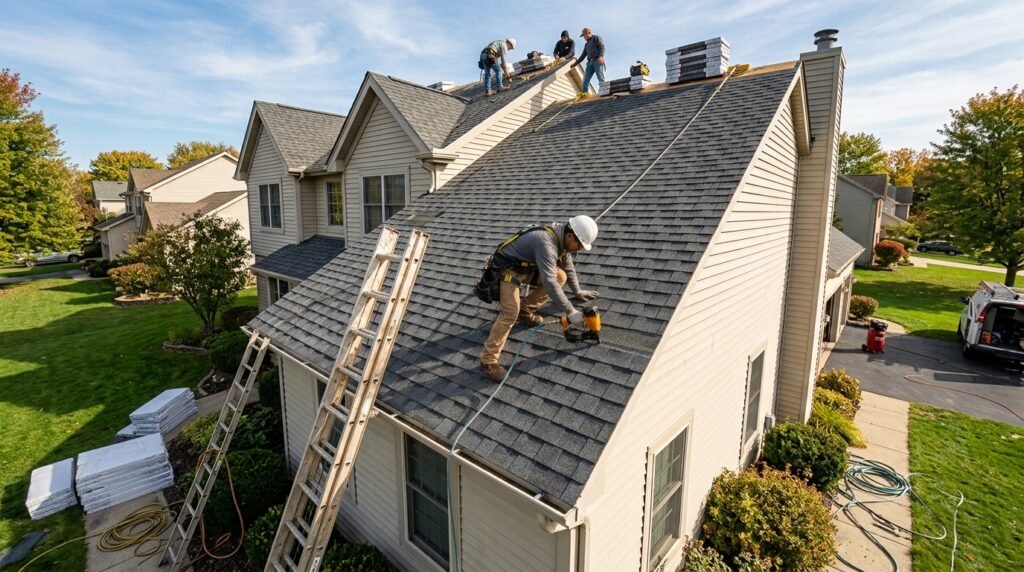
A roof isn’t just “square footage times price.” Steep or cut-up roofs can add 20–40% to labor costs alone, even with the same material.
Roofing Cost Per Square Foot by Material (2026 National Averages)
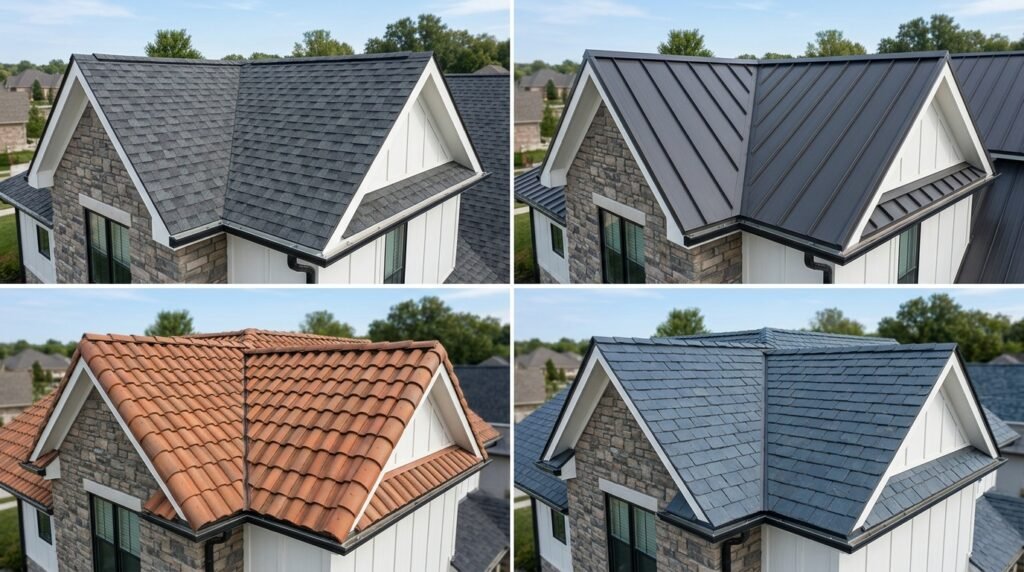
This is the table most homeowners are looking for. Here’s what installed roofing costs — materials and labor combined — for each major roofing type in 2026.
| Material | Cost Per Sq Ft (Installed) | 2,000 Sq Ft Roof | Lifespan |
|---|---|---|---|
| 3-Tab Asphalt Shingles | $3.50–$6.00 | $7,000–$12,000 | 15–20 years |
| Architectural Asphalt Shingles | $5.00–$8.00 | $10,000–$16,000 | 25–30 years |
| Premium Designer Asphalt | $8.00–$12.00 | $16,000–$24,000 | 30–50 years |
| Class 4 Impact-Resistant Shingles | $8.00–$13.00 | $16,000–$26,000 | 25–30 years |
| Corrugated / Exposed-Fastener Metal | $4.00–$8.00 | $8,000–$16,000 | 25–40 years |
| Standing Seam Metal | $9.00–$18.00 | $18,000–$36,000 | 40–70 years |
| Stone-Coated Steel | $10.00–$16.00 | $20,000–$32,000 | 40–70 years |
| Wood Shingles/Shakes | $6.00–$15.00 | $12,000–$30,000 | 30–50 years |
| Clay or Concrete Tile | $10.00–$20.00 | $20,000–$40,000 | 50–100 years |
| Synthetic Slate | $5.00–$12.00 | $10,000–$24,000 | 25–50 years |
| Natural Slate | $15.00–$30.00 | $30,000–$60,000 | 100+ years |
Why the Gap Between Cheap and Premium Is So Big
It’s not just marketing. A basic 3-tab shingle roof might last 15–20 years, while a standing seam metal roof can outlast it three or four times over. When you compare cost per year of service rather than sticker price, the gap narrows considerably — asphalt runs roughly $0.20–$0.35 per square foot per year, while premium metal often lands closer to $0.20–$0.30 per square foot per year too, once you factor in its much longer lifespan.
So is the cheap option really cheaper? Only if you don’t plan to stay in your home long-term.
Asphalt Shingles: The Budget-Friendly Default
Architectural shingles have become the de facto standard for U.S. homes, and most contractors have quietly phased out 3-tab shingles altogether. Expect to pay $5–$8 per square foot installed for a quality architectural shingle from GAF, Owens Corning, or CertainTeed.
Metal Roofing: The Long-Game Investment
Standing seam metal has moved from a niche, barn-style product to a mainstream residential choice — especially in wildfire-prone and hurricane-prone regions. At $9–$18 per square foot, it costs roughly twice what asphalt does upfront, but its 40–70 year lifespan means most homeowners will never replace it again.
Tile and Slate: Built for Centuries, Priced Accordingly
Clay, concrete, and natural slate sit at the top of the price range for good reason — they’re heavy, labor-intensive to install, and can require extra roof framing to support the weight. If your home’s architecture calls for it (Spanish colonial, historic New England, Mediterranean), the look and longevity may be worth the premium.
Roofing Cost Per Square Foot by State (2026)
Here’s where things get interesting. Two homeowners with identical 2,000-square-foot roofs and the same architectural shingles can pay wildly different amounts depending on their zip code.
What Drives State-Level Price Differences?
- Local labor rates — roofing crews in Boston or Hartford earn significantly more per hour than crews in rural Oklahoma
- Building codes — hurricane and wind-uplift codes in Florida and coastal states require reinforced fastening and underlayment
- Climate demands — states with heavy snow loads need ice-and-water shield and enhanced ventilation
- Material transport — distance from manufacturing hubs and quarries affects material cost
- Insurance and licensing requirements — states with stricter contractor licensing tend to have higher quoted labor
Most Expensive States for Roofing in 2026
| State | Average Roof Replacement Cost |
|---|---|
| Minnesota | ~$24,600 |
| New Hampshire | ~$23,900 |
| Massachusetts | ~$22,950 |
| Connecticut | ~$22,830 |
| Wisconsin | ~$22,330 |
| Colorado | ~$22,280 |
| Michigan | ~$22,280 |
| Illinois | ~$22,150 |
| Ohio | ~$22,150 |
| Texas | ~$22,100 |
Most Affordable States for Roofing in 2026
| State | Average Roof Replacement Cost |
|---|---|
| Florida | ~$19,250 |
| West Virginia | ~$19,280 |
| Vermont | ~$19,380 |
| Wyoming | ~$20,140 |
| North Carolina | ~$20,150 |
| Idaho | ~$20,160 |
| New Mexico | ~$20,220 |
| Delaware | ~$20,230 |
A useful sanity check: a straightforward architectural shingle replacement on a roughly 2,000-square-foot home runs close to the $10,500 national average in states like Ohio, but can climb 30–40% higher in markets like coastal California or the Northeast, where labor rates and code requirements are steeper.
A Quick Regional Snapshot
- Northeast (MA, CT, NY, NJ): Expect $8–$13 per square foot due to high labor costs, freeze-thaw climate demands, and dense urban logistics. NYC and Boston metro premiums can add another 20–45% on top of state averages.
- Midwest (OH, IL, MI, WI): Costs run close to or slightly above national averages, driven mainly by severe weather (hail, wind) rather than labor.
- South (TX, FL, NC): A mixed bag — Texas runs high due to hail and hurricane-code demands, while Florida and North Carolina tend toward the lower end despite hurricane exposure, thanks to a larger competitive contractor pool.
- West (CA, CO): Colorado sits high due to hail-driven demand spikes and labor shortages; California often runs 30%+ above the national average due to fire-code underlayment requirements and high labor costs.
What Else Affects Your Total Roofing Cost?
Material and location explain most of the price gap, but a few line items catch homeowners off guard.
- Tear-off and disposal — removing an old roof and hauling away debris typically adds $1,000–$3,000
- Decking repair — rotted or damaged plywood sheets run $70–$200 each to replace
- Underlayment and ice/water shield — $0.20–$1.50 per square foot, often required by code
- Flashing, drip edge, and ventilation — usually $500–$2,000 combined
- Permits — $100–$500 depending on your municipality
- Roof pitch — steep-slope roofs (above 6:12) often add a 15–25% labor surcharge
How to Get an Accurate Roofing Quote
- Get at least three quotes from licensed, insured local contractors
- Ask for price per square foot, not just a lump sum, so you can compare bids fairly
- Confirm what’s included — tear-off, disposal, permits, and warranty terms vary widely between contractors
- Check the material grade — “architectural shingles” can mean a $5/sq ft product or an $8/sq ft product depending on the manufacturer line
- Ask about labor warranties separately from manufacturer material warranties
Final Thoughts
Roofing cost per square foot in 2026 comes down to a simple trade-off: pay less now with asphalt, or pay more upfront for metal, tile, or slate and get decades of extra service life. Add your state’s labor market and climate demands into the mix, and you can land anywhere from $7,000 to $40,000+ for the exact same size roof.
The best way to protect your budget? Know your material’s typical price range before you call a contractor, and always compare quotes by cost per square foot rather than a single bottom-line number.
Frequently Asked Questions
How much does a new roof cost per square foot in 2026?
Most homeowners pay $4 to $11 per square foot installed for standard asphalt shingle roofing in 2026. Premium materials like metal, tile, and slate run $10 to $30 per square foot.
What is the cheapest roofing material per square foot?
3-tab asphalt shingles are the cheapest option, typically costing $3.50 to $6.00 per square foot installed, though most contractors now recommend architectural shingles instead since 3-tab products are being phased out by many manufacturers.
Why does roofing cost more in some states than others?
Labor rates, building codes, climate requirements (like wind-uplift or snow-load standards), and material transport distances all vary by state, creating price differences of 20% or more between the most and least expensive states.
Is metal roofing worth the higher cost per square foot?
For many homeowners, yes. While standing seam metal costs roughly twice as much upfront as asphalt, its 40–70 year lifespan means the cost per year of service is often comparable to — or lower than — asphalt shingles.