Planning a new roof in the Valley of the Sun? Then you already know Arizona roofs live a hard life. Roofing costs in Arizona depend on more than square footage. Brutal heat, relentless UV rays, and a love of tile all shape the price on your quote.
This 2026 report breaks down what homeowners really pay, why desert conditions raise or lower your bill, and how to avoid costly mistakes. Let’s get into it.
How Much Does a New Roof Cost in Arizona in 2026?
The short answer: most homeowners land somewhere between $6,000 and $19,000. One 2026 cost study puts the average Arizona roof at $7,484, with a range from $5,706 to $19,407.
That’s a wide spread. Why?
Because a small ranch home with asphalt shingles and a sprawling Scottsdale estate with clay tile are not the same job. Material, roof size, pitch, and the condition of your roof deck all move the number.
Quick Price Snapshot
- Basic asphalt shingles: the low end of the market
- Concrete tile: mid-to-upper range, very common in the Valley
- Clay tile: upper range, with premium styles costing more
- Metal and specialty roofs: wide range depending on type
Another 2026 Arizona guide shows residential prices running from about $4.85 per square foot for basic asphalt up to roughly $30 per square foot for high-end copper. For a typical 1,700-square-foot pitched roof, that works out to about $8,200 at the low end and $51,000 at the top.
Arizona Roof Replacement Cost by Material
Your material choice is the biggest price lever. Here is how the main options compare in the desert.
Asphalt Shingles
Asphalt is the budget pick. It’s easy to install and widely available. The catch? Desert heat cooks shingles. Granules wear off faster, and the roof may need replacing sooner than it would in a milder climate. Cheap upfront can mean higher costs over time.
Concrete Tile
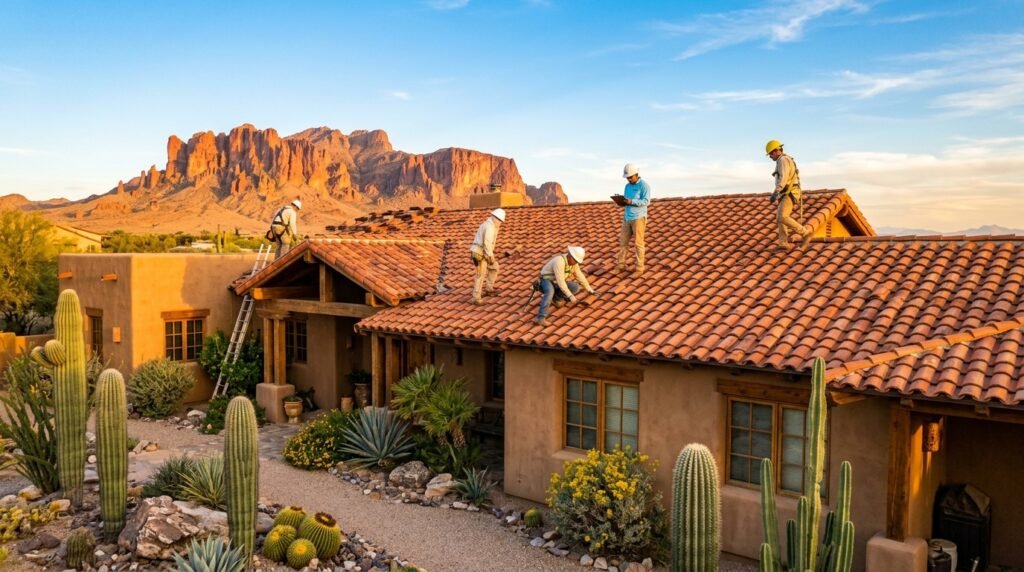
Concrete tile is the workhorse of Arizona roofing. It handles heat well, resists fire, and gives homes that classic Southwest look. It’s heavier than shingles, so your structure must be able to carry the load.
Clay Tile
Clay tile is a premium choice with a long lifespan and rich color that doesn’t fade easily. It costs more, and installation takes skilled crews.
Metal Roofing
Metal reflects heat and sheds monsoon rain quickly. Standing seam systems cost more than tile in many cases, but they can lower cooling loads when paired with reflective coatings.
Foam and Flat Roof Systems
Many Arizona homes have flat or low-slope sections. Spray foam and reflective coatings are popular here because they bounce sunlight away. Commercial and flat systems are priced differently from pitched residential roofs. One guide lists commercial roof costs from around $4 to $15 per square foot.
Tile Roofing Costs in Arizona
Tile deserves its own section, because it’s what most people picture when they think of a desert home.
What You Pay for Tile Materials
Materials are only part of the story. One contractor cost calculator lists clay or concrete tile at about $350 to $600 per square (100 square feet), with underlayment adding $40 to $80 per square. Flashing, fasteners, ridge tiles, and sealant add more.
That same calculator estimates a sample tile job at roughly $8.57 per square foot, or about $6,000 to $12,000 total. Treat this as a ballpark for a smaller roof. Large or complex homes will cost more, and labor rates vary by city.
Why Tile Quotes Vary So Much
- Roof size and pitch: Steeper roofs need more safety gear and time.
- Tile style: Flat, S-profile, and mission tiles all price differently.
- Roof shape: Hips, valleys, and dormers add labor.
- Structural needs: Heavy tile may require reinforcement.
- Underlayment quality: Better underlayment costs more now but saves money later.
The Underlayment Secret Most Homeowners Miss
Here’s something many people don’t realize: the tiles themselves may last 50 years or more, but the layer underneath often doesn’t. In Arizona, the underlayment is what actually keeps water out. Intense heat can break it down long before the tile fails.
That’s why a “tile roof replacement” is often really an underlayment replacement. Crews lift the tile, install new underlayment, and reset the same tiles. Ask your contractor whether this approach fits your roof. It can cost far less than a full tear-off with new tile.
How Arizona Heat Affects Your Roof and Your Costs
Heat is the silent budget-killer here.
On a 110-degree day, roof surfaces can get far hotter than the air. That constant thermal cycling, hot in the day and cooler at night, causes materials to expand and contract. Over the years, that stress leads to cracks, curling, and loose fasteners.
Heat-Related Problems to Watch For
- Brittle or curling shingles
- Cracked sealant around vents and flashing
- Failing underlayment beneath tile
- Warped or sagging decking in older homes
- Attic temperatures that push up your AC bill
How Heat Raises or Lowers Your Cost
Heat can raise your price if it forces extra repairs, such as replacing damaged decking. It can also lower long-term costs if you choose heat-smart materials. Reflective roofing and good attic ventilation reduce strain on your roof and your air conditioner.
Crews also work earlier in the day during summer. That can affect scheduling and, sometimes, labor pricing during peak heat months.
UV Damage: The Slow Roof Killer
Arizona sunshine is a gift for your mood and a curse for your roof.
UV rays break down the chemical bonds in roofing materials. Asphalt loses its oils and dries out. Rubberized coatings chalk and crack. Even sealants and flashing compounds fade and fail.
UV Protection Options
- Reflective or “cool roof” coatings that bounce sunlight away
- Light-colored tile or shingles that absorb less heat
- UV-rated underlayment designed for long exposure
- Regular recoating on foam and flat roofs
Does UV protection add cost? Yes, usually a little. But think of it like sunscreen for your house. A small spend now can stretch your roof’s life by years.
Other Factors That Change Roofing Costs in Arizona
Roof Size and Complexity
Bigger roofs cost more, but complexity matters just as much. The same study notes the average Arizona home is about 2,049 square feet, often with covered patios and courtyards that add roofing work. Don’t forget those extra areas when comparing quotes.
Tear-Off and Disposal
Removing the old roof isn’t free. Removal typically adds about $1 to $3 per square foot. Tile is heavy, so disposal costs add up fast.
Roof Deck Repairs
Once the old roof is off, hidden damage appears. Rotted or sun-damaged plywood must be replaced. Ask your contractor how they price deck repairs, either per sheet or as a flat allowance.
Insulation and Energy Upgrades
Better insulation and radiant barriers can cut cooling costs. They add to the upfront price but often pay you back in lower summer bills.
Permits and Local Codes
Most Arizona cities require a permit for re-roofing. Rules and fees differ between Phoenix, Tucson, Mesa, and smaller towns. Your contractor should handle this, but confirm it’s included in the quote.
Monsoon Season Timing
Monsoon season runs from mid-June through September. Storm damage drives up demand, and busy contractors may charge more or book out weeks. Planning a roof job for fall or winter can mean easier scheduling.
Roofing Costs by Arizona City
Prices shift a bit across the state. Here is what to expect in general.
Phoenix Metro (Phoenix, Mesa, Chandler, Gilbert, Scottsdale)
This is the biggest market, with plenty of competition. Tile is everywhere. Scottsdale and Paradise Valley homes often use premium tile, which pushes averages up.
Tucson
Tucson shares the same heat and UV challenges, plus a strong tile tradition. Pricing is often similar to or slightly below the Phoenix area.
Flagstaff and Northern Arizona
Cold winters and snow load change the equation. Roofs here need strong underlayment, ice protection, and materials rated for freeze-thaw cycles. Metal and architectural shingles are common.
How to Save Money on Your Arizona Roof
Nobody wants to overpay. Here are practical ways to keep costs in check.
- Get at least three written quotes. Compare materials, underlayment, and warranty, not just the bottom line.
- Verify the license. Check the contractor’s status with the Arizona Registrar of Contractors before you sign anything.
- Ask about underlayment-only replacement if your tile is still in good shape.
- Schedule off-peak. Late fall and winter are often quieter.
- Fix small problems early. A $300 repair beats a $15,000 replacement.
- Check your insurance. Hail or wind damage may be covered, so ask before paying out of pocket.
- Look into energy incentives. Programs change often, so confirm what’s available in 2026 with your utility and a tax professional.
When to Repair and When to Replace
Not sure which way to go? Ask yourself a few questions.
- How old is the roof?
- Are leaks showing up in more than one spot?
- Is the underlayment visibly worn or brittle?
- Do repairs keep coming back?
If the damage is small and the roof is young, repair makes sense. If you’re seeing widespread wear, replacement is usually the smarter move.
Red Flags When Hiring a Roofer
- No license number or insurance proof
- Pressure to sign right now
- A quote far below everyone else’s
- No written warranty
- Cash-only demands
Heat and storms attract out-of-state “storm chasers” who vanish after the job. Stick with established local companies with real reviews and a physical address.
Conclusion
Roofing costs in Arizona range widely, but the pattern is clear. Material choice, roof size, and desert conditions drive your price. Tile remains the regional favorite for good reason, though its underlayment is the part that most often needs attention first. Heat and UV are constant, so choose materials and coatings built to fight them.
Your next step is simple. Get a few detailed quotes, ask smart questions about underlayment and ventilation, and don’t wait for a leak to act. A well-planned roof protects your home, your comfort, and your wallet for decades.
Frequently Asked Questions
How much does a new roof cost in Arizona in 2026?
Most homeowners pay between about $6,000 and $19,000. One 2026 study puts the average at $7,484. Premium materials like clay tile or copper push costs much higher.
Is tile roofing worth it in Arizona?
For many homeowners, yes. Tile handles heat well, lasts decades, and suits Southwest architecture. It costs more upfront than shingles, and the underlayment beneath it will likely need replacing before the tile does.
How long do roofs last in Arizona’s heat?
Asphalt shingles tend to wear out faster in the desert than in cooler regions. Tile can last 50 years or more, but the underlayment often lasts closer to 20 to 30 years. Regular inspections help you catch problems early.
Does UV damage affect roofing costs?
Indirectly, yes. UV exposure shortens material life, which means earlier replacement or recoating. Choosing UV-resistant materials and reflective coatings costs a bit more now but can reduce long-term expenses.