Ever received a roofing quote that said “22 squares” and wondered what that meant? You’re not alone. Roofing squares are the standard unit contractors use to measure, price, and order materials. Once you understand them, quotes stop looking like a foreign language, and you can spot a padded estimate fast.
This guide explains what roofing squares are, how to calculate them step by step, and how to turn that number into shingle bundles and a realistic budget.
What Is a Roofing Square?
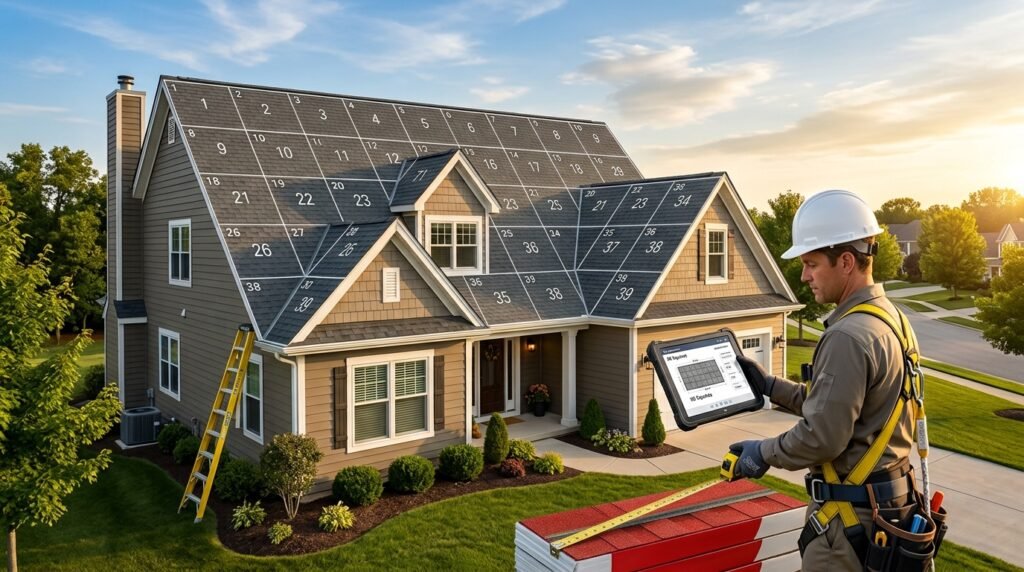
A roofing square is a unit of area equal to 100 square feet of roof surface. That’s it. A roof with 2,000 square feet of surface is a 20-square roof.
Think of it like buying flooring by the box instead of by the tile. It’s a shortcut that keeps big numbers manageable. Roofers, suppliers, and insurance adjusters all use roofing squares, so your quote, material order, and insurance claim will speak the same language.
Why Do Roofers Use Squares Instead of Square Feet?
Roofing materials are packaged and priced around 100 square feet of coverage. Asphalt shingles, for example, are sold in bundles, and a set number of bundles covers one square. Using squares makes ordering, labor pricing, and comparing bids much simpler.
How Many Square Feet Are in a Roofing Square?
Always 100. A 15-square roof is 1,500 square feet. A 30-square roof is 3,000 square feet. The number never changes, whatever material you use.
Why Roofing Squares Matter for Homeowners
Knowing your roof’s size in squares helps you in three big ways:
- Compare bids fairly. Price per square lets you compare contractors on equal footing.
- Avoid overbuying or underbuying. Too little material delays the job. Too much wastes money.
- Check your insurance claim. Adjusters calculate storm damage payouts in squares.
If one contractor says your roof is 18 squares and another says 24, something is off. That gap could mean real money.
How to Calculate Roofing Squares: Step by Step
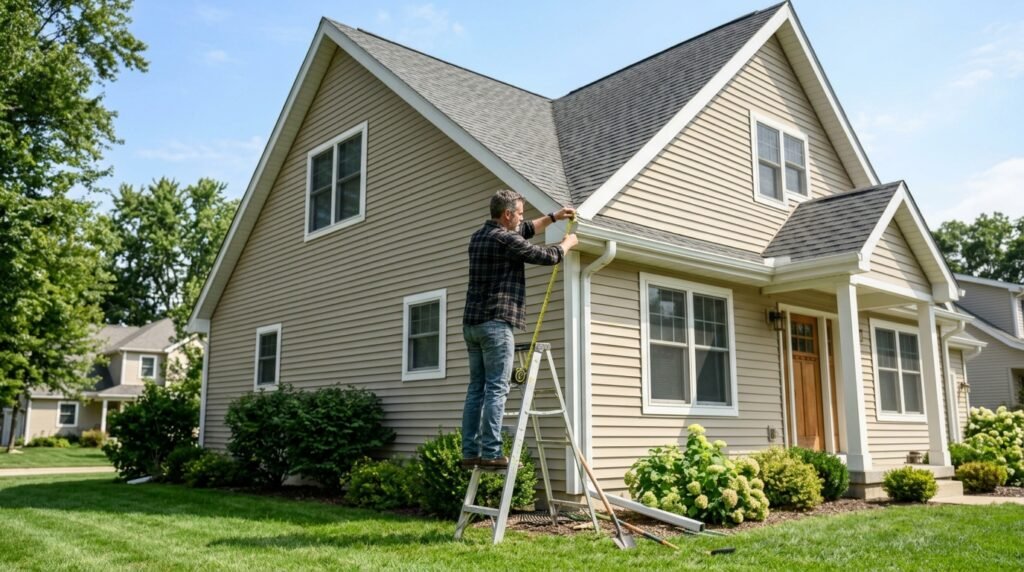
You don’t need to climb on the roof. You can get a solid estimate from the ground using basic math. Here’s the process.
Step 1: Measure the Footprint of Your Home
Measure the length and width of your house. For a simple rectangular house, multiply them.
Example: 40 feet × 30 feet = 1,200 square feet.
If your home has an L-shape or additions, split it into rectangles, measure each, and add them together.
Step 2: Account for Roof Pitch
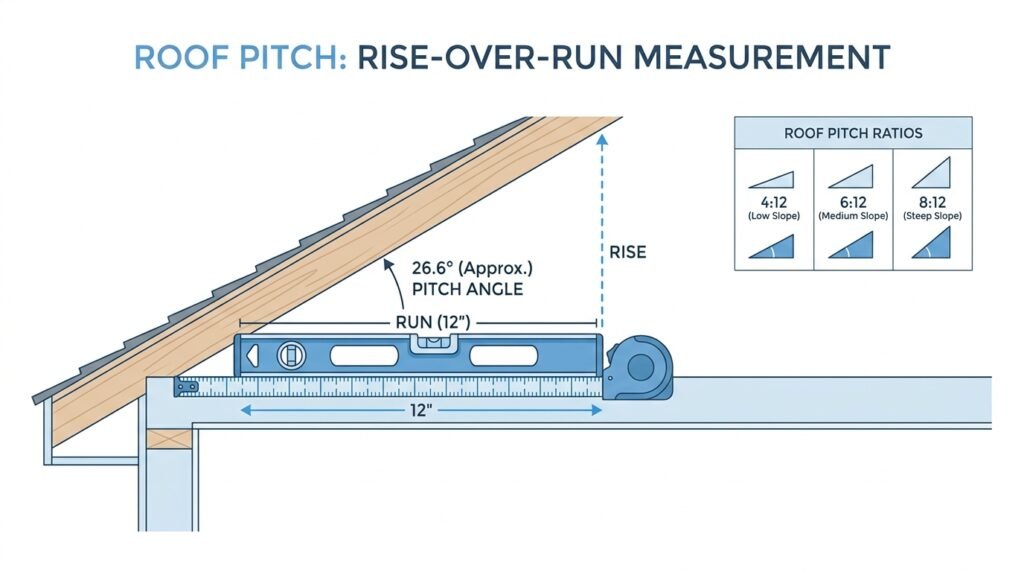
A roof isn’t flat, so its true surface area is larger than the footprint. The steeper the roof, the more surface you have. Pitch is written as rise over run, like 6/12, meaning the roof rises 6 inches for every 12 inches of horizontal distance.
Multiply your footprint by the matching pitch multiplier:
| Roof Pitch | Multiplier |
|---|---|
| 4/12 | 1.054 |
| 5/12 | 1.083 |
| 6/12 | 1.118 |
| 7/12 | 1.158 |
| 8/12 | 1.202 |
| 9/12 | 1.250 |
| 10/12 | 1.302 |
| 12/12 | 1.414 |
Example: 1,200 sq ft × 1.118 (6/12 pitch) = 1,341.6 sq ft of roof surface.
Step 3: Divide by 100
Now convert square feet to roofing squares.
Example: 1,341.6 ÷ 100 = 13.4 squares.
Step 4: Add a Waste Factor
You’ll always cut shingles to fit edges, valleys, and hips. Add extra to cover this waste:
- 10% for simple gable roofs
- 15% for roofs with several valleys, hips, or dormers
- Up to 20% for very complex or custom designs
Example: 13.4 × 1.10 = 14.74, which rounds up to 15 squares.
That’s the number you give your supplier.
How to Find Your Roof Pitch
Place a level against a rafter in your attic and mark 12 inches along it. Measure straight up from the 12-inch mark to the rafter. That vertical measurement is your rise. If you’re not comfortable with this, a pitch gauge app or your contractor can do it in minutes.
Quick Formula Cheat Sheet
Here’s everything in one line:
Roofing squares = (Length × Width × Pitch Multiplier ÷ 100) × (1 + Waste Factor)
Keep this handy when you’re estimating.
Calculating Roofing Squares for Complex Roofs
Not every home is a plain rectangle. Here’s how to handle tougher shapes.
Gable Roofs
A gable roof has two flat planes. Measure the length and the sloped width of one side, multiply, then double it. Or use the footprint-and-pitch method above.
Hip Roofs
Hip roofs slope on four sides. The footprint method works well here, though you’ll want a higher waste factor because of the extra cuts.
Roofs With Dormers, Valleys, or Multiple Sections
Break the roof into individual planes (rectangles and triangles), calculate the area of each, and add them up. For triangles, use ½ × base × height. Add 15% or more for waste.
Using Satellite Measurement Reports
Many roofers use aerial reports that give exact roof measurements in squares. These are often accurate to within a few percent and can save you from guesswork. Ask your contractor if they use one.
How Many Bundles of Shingles Are in a Roofing Square?
For standard asphalt shingles, three bundles typically cover one square. Some heavier architectural or premium shingles use four bundles per square, so always check the manufacturer’s packaging.
Using our 15-square example:
- 15 squares × 3 bundles = 45 bundles
Don’t forget the extras. You’ll also need:
- Underlayment: Rolls vary in size, so check the coverage printed on the label.
- Starter strips along the eaves
- Ridge cap shingles for hips and ridges
- Drip edge, flashing, and nails
How Much Do Roofing Squares Cost?
Contractors often quote a price per square, which includes materials and labor. Costs vary widely by region, material, and roof complexity. As a rough guide, asphalt shingle roofs often run a few hundred dollars per square installed, while metal, tile, and slate cost considerably more.
Here’s how to estimate your total:
Total cost = Number of squares × Price per square
For example, 15 squares at $500 per square would be about $7,500. Treat that as a ballpark only. Get at least three written quotes for your own home.
What Affects the Price Per Square?
- Material type: Asphalt is the budget-friendly option. Metal, tile, and slate cost more.
- Roof pitch: Steep roofs are harder and riskier to work on, so labor costs rise.
- Tear-off: Removing old layers adds cost.
- Roof complexity: More valleys and penetrations mean more labor.
- Location: Labor rates and material prices differ by area.
- Season and demand: Prices can climb after major storms.
Common Mistakes When Measuring Roofing Squares
Avoid these errors and you’ll save time and money:
- Forgetting the pitch. Using only the footprint underestimates your roof.
- Skipping the waste factor. You’ll run short mid-job.
- Ignoring overhangs. Eaves and rakes add surface area, so measure them.
- Mixing up units. Don’t confuse square feet with squares.
- Not rounding up. Order whole squares, and round up, not down.
DIY Estimate vs. Professional Measurement
A DIY estimate is great for budgeting and checking quotes. But for ordering materials or filing an insurance claim, a professional measurement is safer. Roofers can walk the roof, check for damage, and spot problems like rotted decking that affect your final number.
Never climb a steep or wet roof without proper safety gear. If in doubt, measure from the ground or use a satellite report.
Conclusion
Roofing squares are simply 100-square-foot units, but understanding them gives you real power as a homeowner. Measure your footprint, apply the pitch multiplier, divide by 100, and add a waste factor. You’ll know how much material you need and whether a quote is fair.
Before your next roofing project, run the numbers yourself and compare them with your contractor’s estimate. A few minutes of math could save you hundreds of dollars.
Frequently Asked Questions
How many square feet is one roofing square?
One roofing square equals 100 square feet of roof surface.
How many bundles of shingles do I need per roofing square?
Most asphalt shingles require three bundles per square. Some premium or architectural shingles need four, so check the manufacturer’s label.
How do I calculate roofing squares from my house size?
Multiply your home’s length by its width, apply the roof pitch multiplier, divide by 100, and add 10% to 15% for waste.
How much does a roofing square cost?
Prices vary by material, location, and roof complexity. Asphalt shingle installation is generally the most affordable, while metal, tile, and slate cost more. Get several local quotes for an accurate number.