Planning a new roof? Before the first shingle comes off, there’s a question that trips up many homeowners: do you need a roofing permit?
In most U.S. cities and counties, the answer is yes, at least for a full replacement. Skipping it can lead to fines, failed inspections, and trouble when you sell your home. The good news is that getting a roofing permit is usually simple and affordable.
This guide covers when you need one, what it costs, how to apply, and what happens if you skip it.
What Is a Roofing Permit?
A roofing permit is official permission from your local building department to repair or replace your roof. It confirms that the work follows local building codes, which cover fire resistance, wind uptake, structural safety, and energy efficiency.
Think of it as a second set of eyes. An inspector checks that your roof is installed properly, so you aren’t relying only on your contractor’s word.
Why Do Cities Require Roof Permits?
Your roof is a major structural system. A poor installation can cause leaks, mold, or even a collapse in a storm. Permits help protect:
- Your safety: Proper materials and fastening reduce hazards.
- Your neighbors: Fire-rated roofing helps stop fires from spreading between homes.
- Your investment: A documented, inspected roof is easier to insure and sell.
When Do You Need a Roofing Permit?
Rules vary by location, but most areas follow a similar pattern. Here is when you’ll most likely need a permit.
Full Roof Replacement
A complete tear-off and re-roof almost always requires a roofing permit. Even if you’re using the same material, most building departments want to inspect the work.
Changing Roofing Materials
Switching from asphalt shingles to metal, tile, or slate? You’ll need a permit. Heavier materials can affect your home’s structure, so many cities require plans or an engineer’s review.
Structural Changes
Any work that alters the roof’s shape or framing needs a permit. That includes:
- Adding or removing dormers
- Changing the roof pitch
- Installing skylights or solar panels
- Repairing or replacing rafters and decking
Storm Damage Repairs
After a hurricane or hailstorm, many cities require permits for large repairs. Some even speed up the process for storm victims. Your insurance company may also ask for proof of permitted work before paying a claim.
When You Might NOT Need a Permit
Small jobs often skip the paperwork. You may not need a roofing permit for:
- Replacing a few missing or damaged shingles
- Minor leak patching
- Gutter cleaning or repair
- Routine maintenance and inspections
Many cities set a limit, such as repairs covering less than 100 square feet, or less than 25% of the roof. Always confirm with your local office, because the cutoffs differ widely.
Special Cases: HOAs and Historic Districts
Even if your city doesn’t require a permit, your HOA might require approval for color and material. Homes in historic districts often face extra review. Check these rules early to avoid costly delays.
How Much Does a Roofing Permit Cost?
Now to the question everyone asks: what does a roofing permit cost?
In most areas, the fee falls between $100 and $500 for a typical residential re-roof. In high-cost cities, it can run $1,000 or more for larger or more complex projects.
How Permit Fees Are Calculated
Local governments use a few common methods:
- Flat fee: A set price, often $150 to $400, regardless of project size.
- Percentage of project cost: Usually about 1% to 2% of the total roofing job.
- Square footage: A rate per roofing square (100 sq. ft.) or per square foot.
- Tiered pricing: Fees increase with project value.
Example Roofing Permit Costs
| Project Type | Typical Permit Cost |
|---|---|
| Minor repair (if required) | $50 – $150 |
| Standard shingle replacement | $150 – $500 |
| Metal or tile roof installation | $300 – $800 |
| Large or complex re-roof | $500 – $2,000+ |
These are general ranges, not guarantees. Your exact fee depends on where you live.
Other Costs to Expect
The permit fee isn’t always the only charge. You might also pay for:
- Plan review fees: Common for structural or material changes
- Inspection fees: Sometimes included, sometimes billed separately
- Re-inspection fees: Charged if you fail the first inspection
- Expedited processing: An optional extra for faster approval
Does the Permit Cost Come Out of Your Pocket?
Many roofing contractors include the permit fee in their estimate. Others list it as a separate line item. Ask your contractor up front so there are no surprises.
How to Get a Roofing Permit: Step by Step
The process is easier than most people expect. Here’s how it usually works.
Step 1: Contact Your Local Building Department
Call or visit their website to confirm whether your project needs a permit. Ask about fees, required documents, and processing time.
Step 2: Gather Your Documents
You’ll typically need:
- Property address and owner details
- Contractor license and insurance information
- A description of the work and materials
- Project cost estimate
- Roof plans or drawings (for structural changes)
Step 3: Submit Your Application
Many cities now allow online applications. Others still require you to apply in person. Pay the fee when you submit.
Step 4: Wait for Approval
Simple roofing permits can be approved the same day. More complex ones may take one to three weeks.
Step 5: Schedule Inspections
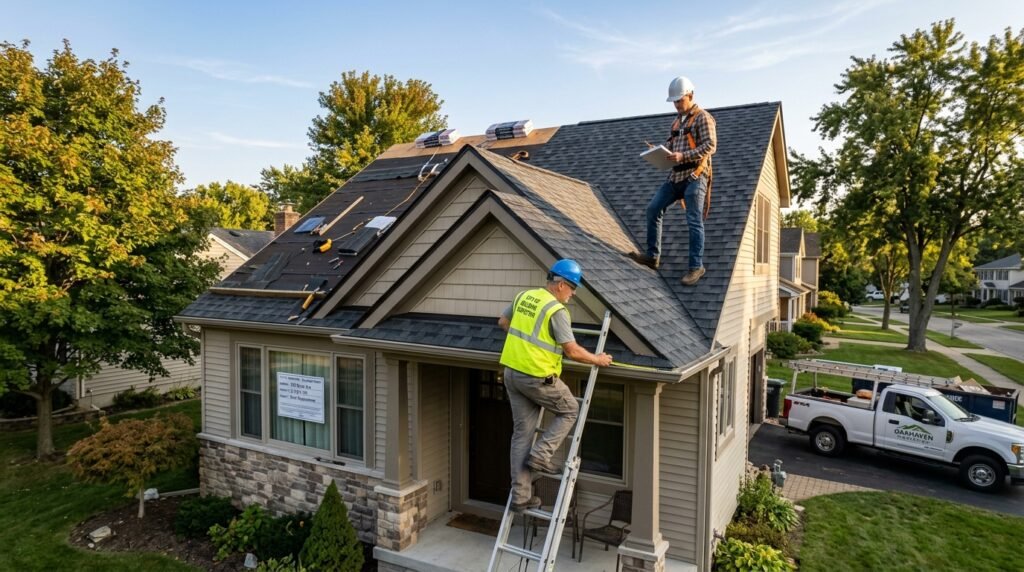
Once work begins, inspectors may visit at key stages, such as after the decking is installed and again after the roof is finished. Don’t cover up work before it’s inspected.
Step 6: Get Final Approval
After the final inspection passes, you receive a sign-off. Keep this record with your home documents.
Who Pulls the Permit: You or Your Contractor?
Most licensed roofers handle permits for you. That’s a good sign. A reputable contractor knows the local rules and takes responsibility for compliance.
Be cautious if a roofer says, “You don’t need a permit,” or asks you to pull it yourself without explanation. Some unlicensed contractors try to dodge permits to save time and money, and that leaves you holding the risk.
Can Homeowners Pull Their Own Permit?
In many places, yes. Homeowners can often apply for a permit on their own home. But you become legally responsible for the work meeting code, and your contractor may not be covered by your permit. Ask your building department what’s allowed.
What Happens If You Skip a Roofing Permit?
It’s tempting to avoid the hassle, but the risks add up fast.
Fines and Penalties
Cities can fine you for unpermitted work. Penalties range from a few hundred dollars to thousands, and some charge double or triple the normal permit fee.
Forced Tear-Off
If an inspector finds unpermitted work, you may have to open up or even redo the roof so it can be inspected. That’s expensive and frustrating.
Insurance Problems
Insurers can deny claims related to unpermitted work. If a storm damages a roof that was never inspected, you could be left covering the repair yourself.
Trouble Selling Your Home
Buyers’ inspectors and lenders often check permit records. Unpermitted work can delay a sale, lower your price, or kill the deal altogether.
Safety Risks
Most importantly, an uninspected roof may have hidden defects. Poor flashing, improper nailing, or weak decking can cause leaks and failures years later.
Tips to Make the Permit Process Smoother
A few habits can save you time and money:
- Check early. Contact your building department before you hire anyone.
- Hire licensed pros. Verify their license and insurance.
- Get it in writing. Your contract should say who pulls the permit and who pays.
- Keep records. Save your approved permit and final inspection report.
- Ask about timing. Peak seasons, like spring and after storms, can slow approvals.
Roofing Permit Requirements by Location
Rules change by state, county, and city. Coastal areas often have stricter wind-resistance requirements. Cold regions may focus on snow load and ice protection. Fire-prone areas may require Class A fire-rated roofing.
Because local codes control everything, your building department’s website is your most reliable source. Search “[your city] roofing permit” to find the exact form and fee schedule.
Conclusion
A roofing permit is a small step that protects a big investment. For most full replacements, material changes, and structural repairs, you’ll need one. Costs typically run a few hundred dollars, which is a small price next to the fines, insurance issues, and resale headaches of skipping it.
Before your project starts, call your local building department, confirm the rules, and make sure your contractor handles the permit properly. A few minutes of prep can save you thousands later.
Frequently Asked Questions
Do I need a permit to replace my roof?
In most U.S. cities, yes. A full roof replacement typically requires a roofing permit, even if you’re using the same materials. Small repairs may be exempt, but check with your local building department.
How much does a roofing permit cost?
Most residential roofing permits cost between $100 and $500. Large or complex projects in high-cost areas can reach $1,000 or more. Fees depend on your city and project value.
How long does it take to get a roofing permit?
Simple permits are sometimes approved the same day. More complex projects may take one to three weeks, depending on your local office and the time of year.
What happens if I replace my roof without a permit?
You may face fines, forced tear-off for inspection, denied insurance claims, and trouble selling your home. Getting a permit after the fact is often more expensive and difficult.