Choosing a new roof is a big decision. It’s also one you’ll live with for decades.
If you’re stuck on metal roof vs tile roof, you’re in good company. Both are premium materials. Both can outlast asphalt shingles by a wide margin. But they differ in price, weight, upkeep, and what they add to your home’s value.
This guide breaks down the real numbers and trade-offs so you can decide with confidence.
Which Is Better, Metal or Tile?
There’s no single winner. Here’s the short version:
- Choose metal if you want a lighter roof, lower installed cost, fast installation, and strong performance in storms and wildfire-prone areas.
- Choose tile if you want a classic Mediterranean or Spanish look, a possible 100-year lifespan (clay), and your home can handle the weight.
Now let’s look at the details.
Metal Roof vs Tile Roof: Cost Comparison
Money is usually the first question. So let’s start there.
Material and Installed Cost per Square Foot
One comparison puts metal at roughly $10 to $20 per square foot installed and tile at $15 to $25. That guide also lists metal lifespans of 40 to 70 years and tile lifespans of 50 to 100 years.
Another source breaks tile materials down by type. Concrete tile runs about $3 to $5 per square foot for materials alone, while clay tile costs about $7 to $10. The same source says labor adds more on tile jobs than on metal ones because tile is heavy, fiddly, and needs specialized crews.
Typical Total Project Cost
For an average home, expect a wide range. One 2026 price guide estimates that a typical 2,000 sq ft home may cost $12,000–$40,000 for metal and $17,000–$60,000 for tile, depending on material and roof pitch.
Another source places typical metal roofs between $5,670 and $17,350, with premium metals like copper reaching $40,000 or more.
Why such different numbers? Roof size, pitch, local labor rates, and metal type all change the price. Treat any online figure as a starting point, then get at least three local quotes.
What Drives the Price Up
Several things can push your bill higher:
- Material type: Steel is cheaper. Aluminum, zinc, and copper cost more. Clay costs more than concrete tile.
- Roof complexity: Valleys, dormers, and steep pitches add labor.
- Structural work: Tile is heavy, so your home may need reinforcement. That can add thousands of dollars to the project.
- Old decking: If the deck underneath is damaged or uneven, expect repairs.
Cost Snapshot
| Factor | Metal Roof | Tile Roof |
|---|---|---|
| Typical installed cost | Lower to mid-high | Mid to high |
| Weight | Light | Very heavy |
| Structural upgrades | Rarely needed | Often needed |
| Labor | Specialized | Specialized, slower |
Durability and Lifespan
Both roofs are built to last. But “last” means different things in practice.
How Long Does a Metal Roof Last?
Most quality metal roofs last 40 to 70 years. Some sources say 40 to 80 years or longer. Coating quality matters here. For standing seam metal, the factory finish is the main factor in how long it holds up.
How Long Does a Tile Roof Last?
Clay tile is the long-distance champion. Concrete tiles typically last 50+ years, while clay tiles are known for lasting over a century.
One catch: the tiles often outlive the underlayment beneath them. That layer may need replacing long before the tiles do.
Weather Resistance
Each material handles weather in its own way.
Wind and hail. Metal flexes and sheds impact well, though thin panels can dent in heavy hail. Tile is strong but brittle. A big hailstone or a fallen branch can crack it.
Fire. Both are fire-resistant, which is why they’re common in wildfire zones.
Freeze-thaw. This is tile’s weak spot. Freeze-thaw cycles are the main enemy of tile roofing. If you live where winters swing above and below freezing, check the tile’s freeze rating.
Coastal air. Salt can corrode some metals. Aluminum and coated steel handle it better.
Noise
Many homeowners worry about rain noise on metal. You may hear some noise during a storm. Proper insulation and solid decking cut most of it. Tile is naturally quieter.
Weight and Structural Needs
This may be the biggest practical difference.
Tile is very heavy. Before you commit, a structural engineer or experienced roofer should confirm your framing can carry the load. Metal is a lightweight alternative if your structure can’t support tile.
Metal also works well for re-roofing. In many cases it can go over existing layers where code allows, which saves tear-off costs.
Wondering if your attic framing is up to the task? An inspection is a small cost compared to a failed roof.
Energy Efficiency and Comfort
Good news: both options can help lower cooling bills.
Metal roofs reflect sunlight, especially with “cool roof” coatings. Tile works differently. Tiles are installed so there’s usually a natural air gap between the tile and the roof deck. That gap helps move heat away.
In hot climates like Florida, Texas, and Arizona, both are strong performers. Your savings depend on your insulation, attic ventilation, and local utility rates.
Maintenance Needs
Neither roof is truly “set and forget.” But the chores differ.
Metal roof maintenance:
- Rinse off debris once or twice a year
- Check fasteners and sealants
- Touch up scratches to prevent rust
- Clear gutters and valleys
Tile roof maintenance:
- Replace cracked or slipped tiles
- Watch the underlayment and flashing
- Remove moss and algae in damp climates
- Avoid walking on the roof, since tiles break
Tile repairs are common because individual pieces crack. Metal repairs are less frequent, but they should be done by someone who knows metal.
Curb Appeal and Style
Looks matter, especially if you plan to sell.
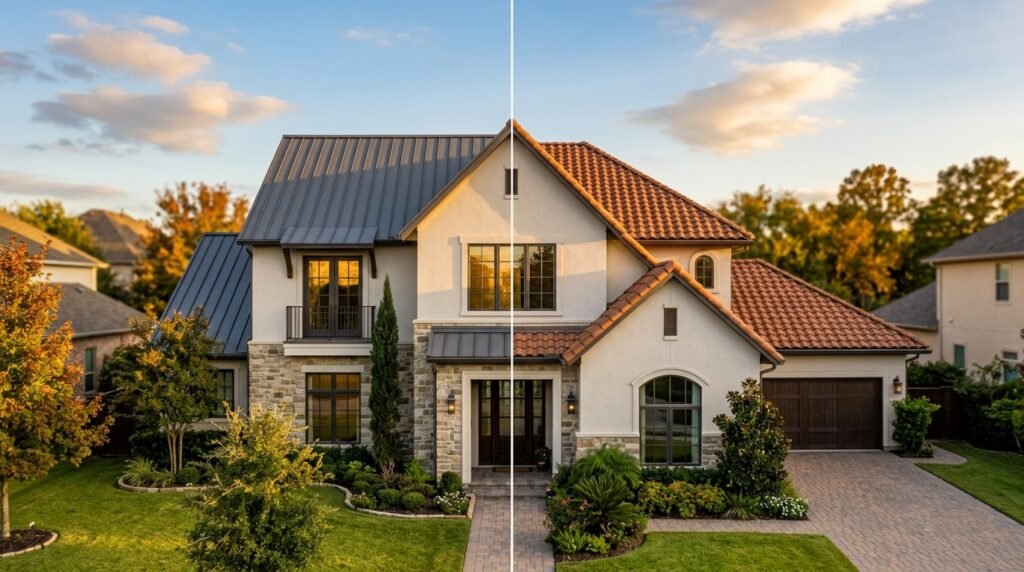
Metal comes in many profiles and colors. Standing seam gives a clean, modern look. Metal shingles and stone-coated panels can mimic slate, shake, or even tile.
Tile offers a warm, textured look. Barrel tile suits Spanish, Mediterranean, and Southwestern homes. Flat tile can suit more traditional designs.
Check your HOA rules and local building codes first. Some neighborhoods limit materials or colors.
ROI: Which Roof Pays Off More?
Here’s where the metal roof vs tile roof debate gets interesting.
Upfront Cost vs Lifetime Cost
Both cost more than asphalt shingles on day one. But over 40 years, factors like energy savings, resale value, and fewer replacements can favor metal or tile.
Think of it as cost per year of service. A roof that costs more but lasts twice as long can be the cheaper choice over time.
Resale Value
Buyers pay attention to roof age. A home with a metal or tile roof can command a higher asking price, since buyers like a roof that won’t need replacing for decades.
Results depend on your market. In tile-heavy regions, a tile roof feels expected. In other areas, metal may stand out as a modern upgrade.
Insurance and Energy Savings
Some insurers offer discounts for impact-resistant or fire-rated roofing. Ask your agent before you buy. Pair that with lower cooling costs and the long-term math improves.
Metal vs Tile ROI at a Glance
- Metal: Often better short-to-mid-term payback thanks to lower installed cost and little structural work.
- Tile: Strong long-term value, especially clay, if your structure already supports it and you’ll stay for decades.
Pros and Cons Summary
Metal Roof Pros
- Lightweight
- Long lifespan (40–70+ years)
- Strong wind and fire performance
- Energy-efficient with reflective coatings
- Many styles and colors
Metal Roof Cons
- Can dent in severe hail
- May be noisier without insulation
- Premium metals are costly
- Needs an installer with metal experience
Tile Roof Pros
- Very long lifespan, especially clay
- Classic, upscale appearance
- Naturally quiet
- Excellent fire resistance and ventilation
Tile Roof Cons
- Very heavy, may need reinforcement
- Brittle and can crack
- Higher labor cost
- Freeze-thaw can shorten its life in cold regions
Which Roof Should You Choose?
Ask yourself a few simple questions:
- What’s your climate? Freeze-thaw winters lean metal. Hot, dry regions suit either.
- Can your home carry the weight? If not, metal wins.
- How long will you stay? Staying 30+ years makes tile (especially clay) more attractive.
- What’s your style? Match the look to your home and neighborhood.
- What’s your budget? Metal usually has the lower installed cost.
A good roofer will measure, inspect your framing, and give you a written quote for both. Always check licensing, insurance, and reviews. Make sure your roofer has real metal roof installation experience. The same goes for tile.
Conclusion
The metal roof vs tile roof question comes down to your home, budget, and plans. Metal tends to cost less to install, weighs less, and suits many climates. Tile brings unmatched longevity and classic style, but it needs strong framing and careful upkeep.
Both can beat asphalt on lifetime value. Get a structural check, collect several quotes, and weigh the total cost over 30 to 50 years, not just the price today. That’s the surest path to a roof you’ll be glad you chose.
Frequently Asked Questions
Is a metal roof cheaper than a tile roof?
Usually, yes. Metal generally has a lower installed cost and rarely needs structural reinforcement. Copper and zinc are exceptions and can cost as much as tile or more.
Which lasts longer, metal or tile?
Clay tile can last 100 years or more. Quality metal roofs commonly last 40 to 70 years or longer. Concrete tile falls between the two.
Does a metal or tile roof add more resale value?
Both can raise buyer appeal because they won’t need replacing soon. The better choice depends on your local market and what buyers in your area expect.
Can my house support a tile roof?
Not always. Tile is very heavy, so have a structural engineer or experienced roofer check your framing first. Metal is the lighter option if reinforcement isn’t practical.